
Views: 0 Author: Site Editor Publish Time: 2026-11-05 Origin: Site


Transporting shipping containers on a flatbed semi trailer requires careful planning, proper loading equipment, reliable locking devices, and thorough safety inspections. Incorrect container positioning, inadequate securement, uneven weight distribution, or damaged locking points can cause serious accidents during transportation.
For logistics companies, freight forwarders, container transport operators, and fleet managers, understanding how to load containers safely on a flatbed trailer is essential for protecting cargo, drivers, vehicles, and other road users.
This guide explains the complete container loading process, including trailer preparation, container positioning, twist-lock operation, alternative securing methods, weight distribution, pre-trip inspections, and common mistakes to avoid.
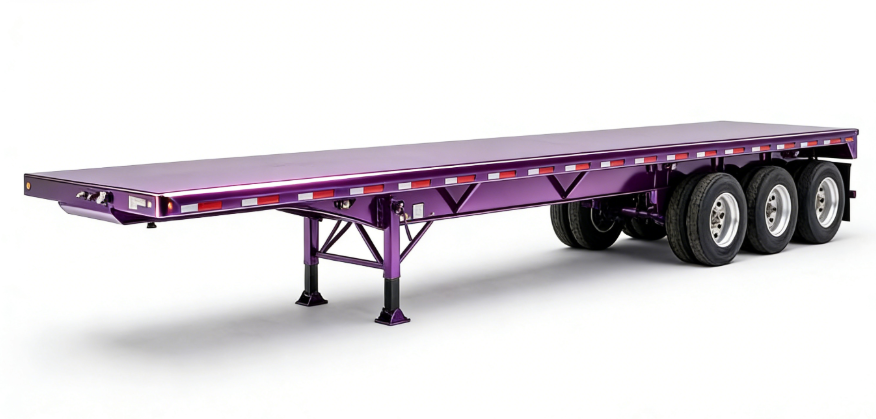
Before loading a shipping container, confirm that the flatbed semi trailer is designed and equipped to carry it safely.
A standard flatbed semi trailer provides an open cargo platform and can transport different types of cargo. When used for container transportation, it should have suitable container supports and locking devices.
A purpose-built container chassis is specifically designed with container-supporting structures and twist locks. A general-purpose flatbed may also carry containers if it has an appropriately engineered support and securement arrangement.
| Container Type | Nominal External Length | Nominal External Width | Nominal External Height |
|---|---|---|---|
| 20ft Standard Container | 6.06 m | 2.44 m | 2.59 m |
| 40ft Standard Container | 12.19 m | 2.44 m | 2.59 m |
| 40ft High Cube Container | 12.19 m | 2.44 m | 2.90 m |
| 45ft High Cube Container | 13.72 m | 2.44 m | 2.90 m |
Note: These are commonly used nominal dimensions. Actual dimensions and weights should be checked against the container's identification plate and manufacturer specifications.
The trailer deck length and width are suitable for the container.
The trailer has correctly positioned container supports or locking points.
Twist locks, locking sockets, and other securing components are compatible with the container's corner fittings.
The trailer's rated payload and axle capacities are sufficient.
The tractor unit and fifth-wheel configuration are compatible with the loaded trailer.
The container's gross weight is within the permitted limits of the trailer and complete vehicle combination.
Do not assume that every flatbed trailer can carry every container size. Confirm the trailer's design and rated configuration before loading.
Proper preparation helps prevent container movement, damage, and loading accidents.
Before positioning a container, inspect the main chassis, crossmembers, deck, suspension, axles, tires, brakes, and landing gear.
Pay particular attention to:
Cracks or deformation in the main beams
Damaged or loose crossmembers
Corrosion or structural damage around container support points
Damaged twist locks or locking sockets
Loose bolts and defective locking components
Tire pressure and visible tire damage
Brake hoses, electrical connections, and lighting
Any damaged structural or locking component should be repaired or replaced before the trailer is used.
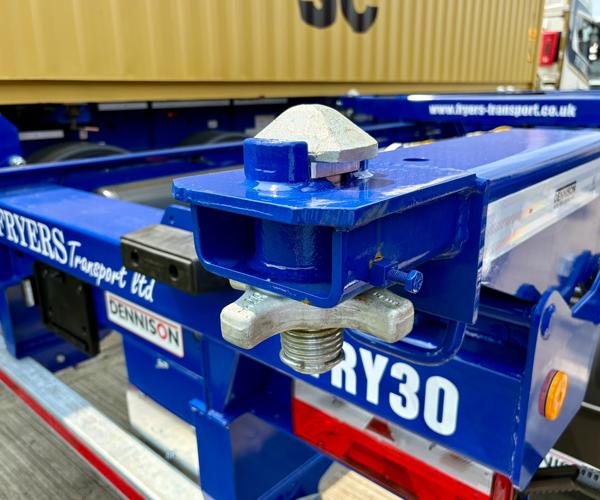
Twist locks are commonly used to connect shipping container corner fittings to a container chassis or appropriately equipped flatbed trailer.
Before loading, check that:
All required locking devices are installed.
The locking heads rotate and operate correctly.
There is no serious deformation, cracking, or excessive wear.
Locking devices are compatible with the container corner castings.
No debris prevents the container from seating properly.
Never use a damaged twist lock or an unsuitable locking socket.
The trailer should be positioned on firm, level ground whenever possible.
The loading area should have:
Sufficient space for the crane, reach stacker, or forklift where applicable
Clear access for the tractor and trailer
Adequate lighting and visibility
A controlled exclusion zone around lifting operations
Ground conditions capable of supporting the loading equipment
The tractor and trailer should be secured against unintended movement according to the site's loading procedures.
Correct positioning is essential for vehicle stability and compliance with road weight limits.
Check the container's identification plate and shipping documentation.
Confirm:
Container tare weight
Cargo weight
Verified gross mass or other applicable gross-weight documentation
Maximum permitted container gross mass
Trailer payload and axle-load limits
Do not rely only on the weight declared verbally by the shipper. Where necessary, verify the actual loaded weight using suitable weighing equipment.
The container should be placed on the designated support points so that its lower corner fittings are properly supported.
For a standard container, the four lower corner fittings are the principal support and connection points.
The container should not be placed on random sections of the deck, unsupported areas, or components that are not designed to carry its weight.
The container's position affects the load transferred to the trailer axles and tractor fifth wheel.
An incorrect position can result in:
Excessive load on one axle group
Excessive fifth-wheel load
Insufficient steering-axle load
Poor vehicle handling
Increased tire and suspension stress
For a 20ft container, its position may need to be adjusted according to the trailer's designated mounting points and the load distribution requirements.
For a 40ft container, confirm that the trailer provides the correct support and locking positions for its length.
Important: A container that fits physically on the trailer is not necessarily loaded correctly. The final axle loads and gross vehicle weight must comply with the applicable regulations.
Twist locks are one of the most widely used methods for securing intermodal containers during road transportation.
They connect the container's corner castings to the trailer's locking points and help prevent unwanted movement.
A typical twist lock consists of a locking head, operating mechanism, and mounting structure.
The container is lowered onto the trailer so that the twist-lock heads enter the lower corner castings. The locks are then rotated into the locked position according to the manufacturer's instructions.
Confirm that the twist locks are in the correct loading position.
Use suitable lifting equipment to lower the container onto the designated support points.
Ensure that the container's lower corner fittings are correctly seated.
Operate each twist lock according to its design.
Confirm that all required locks are fully engaged.
Visually inspect the locking points from accessible positions.
Confirm that no locking device is damaged, obstructed, or left partially engaged.
Never assume that a container is secured simply because it is resting on the trailer.
| Function | Benefit |
|---|---|
| Longitudinal restraint | Helps prevent forward and backward container movement |
| Lateral restraint | Helps prevent side-to-side movement |
| Vertical restraint | Helps prevent unintended lifting or separation |
| Secure connection | Connects container corner fittings to the trailer |
| Operational efficiency | Allows standardized container handling |
The required number and arrangement of locking devices depend on the trailer design, container configuration, and applicable regulations.
For a container carried on a properly designed container chassis, all required lower corner fittings should be secured using the specified integral or separate locking devices.
Not every flatbed trailer is equipped with integrated twist locks. In certain applications, an appropriately engineered alternative securement system may be used.
Possible methods include:
Direct chain lashings
Wire-rope lashings
Crossed chains attached to suitable container fittings
Other approved integral securing devices
The method must be designed for the container, trailer, anchor points, load, and applicable transport regulations.
| Comparison | Twist Locks | Chain Securement |
|---|---|---|
| Main application | Containers on compatible chassis or flatbeds | Containers transported using an approved alternative arrangement |
| Connection point | Container corner fittings and trailer locking points | Suitable container fittings and rated trailer anchor points |
| Operation | Locking mechanism | Chain attachment and tensioning |
| Inspection | Check engagement and locking condition | Check chain condition, attachment, tension, and working load limit |
| Main advantage | Purpose-designed container connection | Can provide an alternative where properly engineered |
| Main consideration | Trailer and container compatibility | Correct lashing geometry, rated equipment, and regulatory compliance |
Do not use ordinary cargo straps or chains as an automatic substitute for twist locks. The securing method must be appropriate for the specific vehicle and container arrangement.
For example, under U.S. FMCSA regulations, loaded intermodal containers carried on vehicles other than container chassis vehicles have specific requirements for supporting and securing their lower or upper corners. The front and rear must be secured independently. Other countries may have different rules.
Weight distribution is one of the most important aspects of safe container transportation.
A container may be within its own maximum gross weight but still exceed the permitted axle loads of the tractor-trailer combination.
| Weight Item | Meaning |
|---|---|
| Container Tare Weight | Weight of the empty container |
| Cargo Weight | Weight of the goods inside the container |
| Container Gross Weight | Tare weight plus cargo weight |
| Trailer Tare Weight | Weight of the empty trailer |
| Trailer Payload | Permitted cargo weight according to the trailer rating |
| Gross Vehicle Combination Weight | Total weight of the tractor, trailer, container, and cargo |
| Axle Load | Actual load carried by an individual axle or axle group |
Consider the following principles:
Position the container according to the trailer manufacturer's loading arrangement.
Avoid placing excessive weight at the front or rear.
Check the load transferred to the tractor's fifth wheel.
Confirm that each trailer axle group remains within its permitted load.
Use a certified weighbridge or suitable weighing system when necessary.
Check local maximum vehicle dimensions and weight restrictions.
A weighing check is particularly important when transporting heavy containers or operating in countries with strict axle-load enforcement.
The condition of the container is also important for safe road transportation.
Before loading, inspect the container for visible damage.
| Inspection Area | What to Check |
|---|---|
| Corner Castings | Cracks, deformation, and damage |
| Side Panels | Holes, serious dents, or structural damage |
| Roof | Damage, deformation, or water ingress |
| Doors | Proper closing and locking operation |
| Door Locking Bars | Secure operation and no serious damage |
| Bottom Structure | Visible damage or deformation |
| Identification Plate | Container identification and applicable ratings |
Containers with damaged corner fittings should not be connected using defective fittings. A visibly unsafe container should not be transported until it has been assessed and made suitable for the intended movement.
After loading and securing the container, conduct a complete pre-trip inspection.
| Inspection Item | Requirement |
|---|---|
| Container Position | Correctly positioned on designated supports |
| Twist Locks | All required locks fully engaged |
| Alternative Lashings | Correctly attached and tensioned where applicable |
| Container Condition | No visible damage affecting safe transportation |
| Weight Distribution | Within permitted axle and gross vehicle limits |
| Trailer Chassis | No visible structural defects |
| Tires | Correct condition and pressure |
| Braking System | Properly connected and operational |
| Lights and Reflectors | Working correctly |
| Landing Gear | Fully raised and secured |
| Air and Electrical Lines | Correctly connected and routed |
| Overall Dimensions | Within applicable legal limits or covered by permits |
The driver should not depart until all identified safety issues have been resolved.
For longer journeys, conduct additional inspections at suitable stops and whenever required by local regulations or company procedures.
Even experienced transport operators can make mistakes that increase the risk of accidents.
| Common Mistake | Possible Consequence | Recommended Prevention |
|---|---|---|
| Using damaged twist locks | Container may not be properly secured | Inspect and replace defective locks |
| Incorrect container positioning | Uneven axle loads and unstable handling | Follow the trailer's designated support arrangement |
| Ignoring container gross weight | Overloading and regulatory violations | Verify container and vehicle weights |
| Using unsuitable chains | Securement failure | Use properly rated equipment and approved attachment points |
| Failing to check corner fittings | Insecure connection or structural damage | Inspect all relevant fittings before loading |
| Leaving locks partially engaged | Container movement during transport | Perform a visual locking inspection |
| Ignoring trailer defects | Increased risk of breakdown or accidents | Complete pre-trip inspections |
| Driving before checking dimensions | Clearance problems and legal violations | Verify total height, width, and length |
Safe loading requires cooperation between the loading operator, driver, transport company, and equipment supplier.
If your business regularly transports 20ft and 40ft containers, selecting the right flatbed semi trailer can improve operating efficiency and transport safety.
Consider the following factors when purchasing a container-carrying flatbed trailer.
Choose a trailer that supports the container sizes used in your business.
For example:
A 20ft container requires compatible support and locking positions.
A 40ft container requires a suitable longer platform or dedicated mounting arrangement.
A combination of 20ft and 40ft operations may require a trailer with multiple designated locking positions.
Confirm the trailer's actual design rather than relying only on its advertised length.
The axle and suspension configuration should match the required payload, tractor unit, road conditions, and local regulations.
Important considerations include:
Axle brand and rated capacity
Axle quantity and spacing
Mechanical or air suspension
Tire size and load rating
Brake configuration
Availability of replacement parts
For operations in regions with rough roads, maintenance support and component availability should be considered alongside the technical specifications.
A strong chassis helps support the container load and withstand the stresses associated with transportation.
Buyers should review:
Main beam dimensions and material specifications
Crossmember arrangement
Welding quality
Container support structure
Locking-device mounting points
Corrosion protection and paint quality
The chassis should be engineered for the specified payload and intended container configuration.
Check the number, location, design, and rated suitability of the twist locks.
The locking arrangement should be compatible with the intended container sizes and should allow the operator to inspect and operate the locks safely.
For international buyers, especially those operating in Africa, the Middle East, and Southeast Asia, spare-parts availability is an important purchasing consideration.
Ask the supplier about:
Twist lock replacement parts
Axle and suspension components
Brake system parts
Landing gear
Tires and wheels
Warranty coverage
Technical support and maintenance guidance
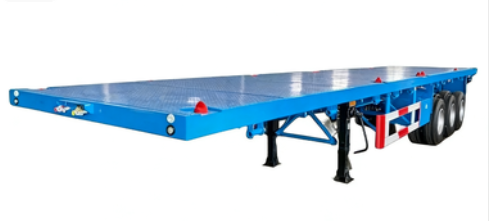
For container transport companies, choosing a reliable trailer manufacturer is an important part of building a safe and efficient fleet.
Hunan Chengxin Special Vehicle Co., Ltd. provides semi trailer solutions for different transportation applications, including flatbed and container-carrying trailers.
When discussing a container transport project with Chengxin, buyers can specify:
20ft or 40ft container transportation requirements
Required payload and axle configuration
Mechanical or air suspension
Axle and tire specifications
Container locking-device arrangement
Tractor unit specifications
Destination country and operating road conditions
Custom requirements for the trailer platform
The final configuration should be confirmed through a technical review of the container dimensions, cargo weight, tractor compatibility, trailer ratings, and destination-country regulations.
A clear technical specification and inspection plan help ensure that the supplied trailer matches the intended container transportation application.
Yes, provided that the trailer has sufficient platform length, suitable container supports and locking devices, and adequate rated capacity. Its axle loads, gross vehicle weight, and dimensions must also comply with applicable regulations.
A standard freight container normally has four lower corner fittings. On a purpose-built container chassis, the four lower corners are generally secured using compatible locking devices. The exact arrangement must follow the trailer design and applicable regulations.
Some flatbed arrangements may use alternative securing systems, such as properly designed chain or wire-rope lashings. However, these systems must comply with the applicable rules and use suitable container attachment points and rated trailer anchors. They should not be improvised.
Use a compatible locking or lashing system, ensure the container is correctly supported, verify weight distribution, and inspect every securing point before departure. The complete system must be suitable for the container and vehicle.
It may be possible if the trailer has designated support and locking positions for a 20ft container. The container must be positioned and secured according to the trailer's design, and its weight must be distributed within permitted axle limits.
A flatbed trailer is a general-purpose open platform used for different types of cargo. A container chassis is specifically designed for carrying shipping containers, with dedicated support structures and container locking devices. Some flatbed trailers are also equipped for container transportation.
Drivers should check the container's position, twist locks or alternative securement devices, container condition, gross weight, axle loads, tires, brakes, lights, landing gear, and overall vehicle dimensions.
Incorrect weight distribution can overload individual axles, affect steering and braking, increase tire wear, and reduce vehicle stability. The container should be positioned according to the trailer design, with actual axle loads verified where necessary.
Loading containers safely on a flatbed trailer requires more than simply placing a container on the platform. Proper trailer preparation, correct positioning, suitable locking devices, weight distribution, and pre-trip inspections are all essential.
For regular 20ft and 40ft container transportation, buyers should select a flatbed semi trailer with an appropriately designed support structure, compatible twist locks, suitable axle and suspension configurations, and sufficient rated capacity.
Following recognized cargo-securement practices and local transport regulations helps reduce the risk of container movement, vehicle damage, and road accidents.
Looking for a reliable flatbed semi trailer for 20ft and 40ft container transportation? Contact Hunan Chengxin Special Vehicle Co., Ltd. to discuss your required payload, axle configuration, container sizes, and destination market. Our team can help review a suitable trailer specification for your transportation needs.


