
Views: 0 Author: Site Editor Publish Time: 2026-11-12 Origin: Site


Semi trailers play an essential role in modern transportation, logistics, construction, mining, agriculture, and international trade. Different types of semi trailers are designed to carry different kinds of cargo, from shipping containers and construction machinery to bulk materials, fuel, livestock, and general freight.
Choosing the right semi trailer is important for transportation efficiency, cargo safety, operating costs, and compliance with local regulations. However, with so many trailer configurations available, buyers may find it difficult to understand the differences between flatbed trailers, lowbed trailers, dump trailers, container chassis, tank trailers, and other specialized models.
This complete guide to semi trailer types explains the main categories, their structures, applications, advantages, and selection criteria. Whether you are a logistics operator, construction contractor, mining company, or international trailer buyer, this guide will help you identify the right semi trailer for your transportation requirements
Explore the complete guide to semi trailer types, including flatbed, lowbed, dump, tanker, container, curtain-side, livestock, and more. Compare their features, uses, and selection tips.
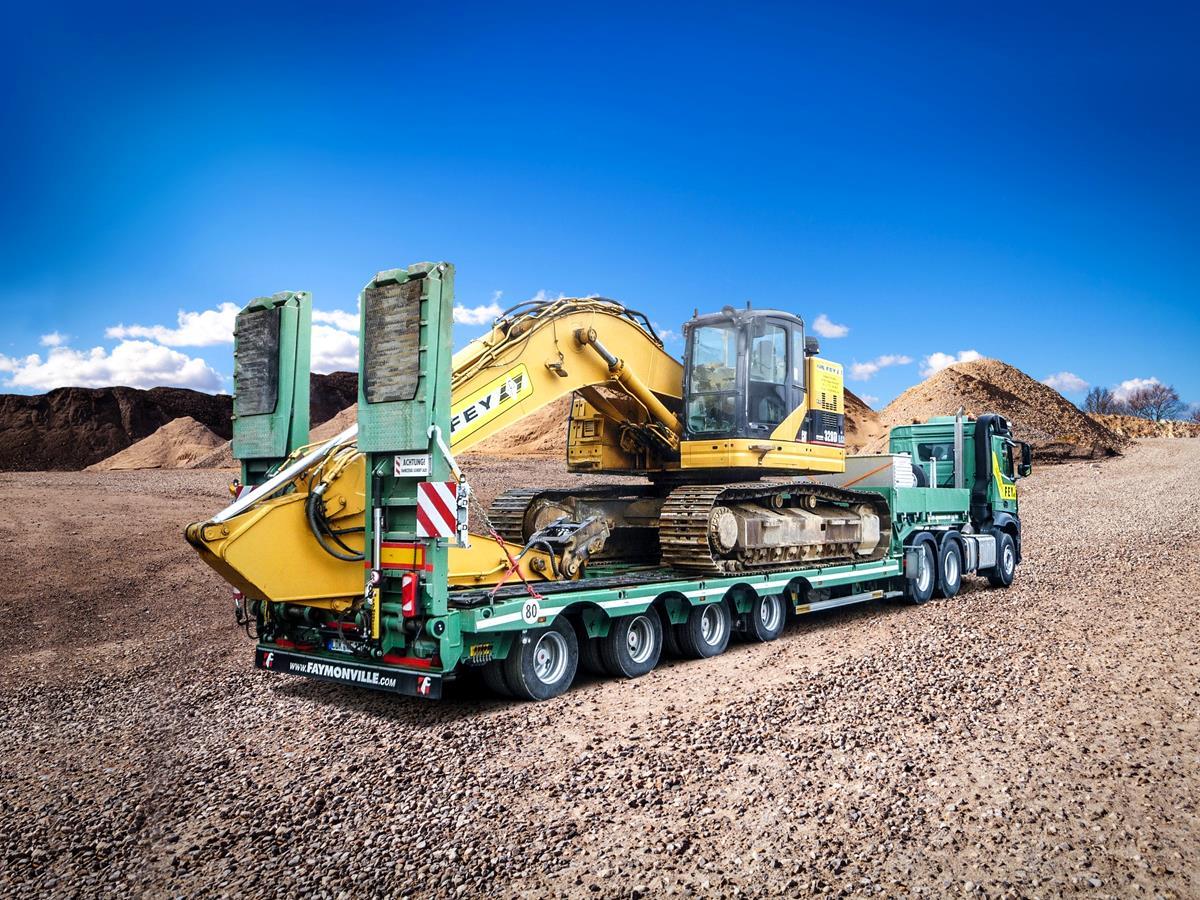
A semi trailer is a non-powered road vehicle designed to be connected to a truck tractor through a fifth-wheel coupling or another compatible coupling system.
Unlike a full trailer, a semi trailer does not normally have a complete front axle arrangement supporting its entire weight independently. Part of its weight is transferred to the towing tractor through the coupling, while the remaining load is carried by its own axles.
Semi trailers are widely used because they can be configured for different cargo types and transportation conditions.
A typical semi trailer may include the following components:
| Component | Main Function |
|---|---|
| Main Chassis | Supports the cargo and transfers loads to the axles and tractor |
| Kingpin | Connects the trailer to the tractor's fifth wheel |
| Axles | Support the trailer and cargo weight |
| Suspension System | Connects axles to the chassis and manages road movement |
| Tires and Wheels | Support the load and provide road contact |
| Landing Gear | Supports the trailer when disconnected from the tractor |
| Braking System | Provides braking performance and supports vehicle safety |
| Electrical System | Connects trailer lighting and other electrical functions |
| Cargo Body or Platform | Holds or supports the transported cargo |
| Coupling and Securing Devices | Connect the trailer to the tractor or secure cargo, depending on the design |
The structure and equipment vary according to trailer type and intended application.
The following table summarizes common semi trailer types and their applications.
| Semi Trailer Type | Main Cargo | Main Structural Feature | Typical Application |
|---|---|---|---|
| Flatbed Semi Trailer | Steel, machinery, pipes, general cargo | Open loading platform | Logistics and construction |
| Lowbed Semi Trailer | Excavators, bulldozers, heavy machinery | Low loading deck | Mining and heavy equipment transport |
| Dump Semi Trailer | Sand, gravel, coal, ore | Hydraulic tipping body | Mining and construction |
| Sidewall Semi Trailer | Pallets, bagged goods, steel, general cargo | Platform with side panels | General freight |
| Fence Semi Trailer | Agricultural products, livestock-related cargo, bagged goods | Open platform with fence structure | Agriculture and bulk freight |
| Container Chassis Trailer | 20ft, 40ft, and compatible containers | Skeletal chassis with container locks | Ports and container logistics |
| Van Semi Trailer | Cartons, packaged goods, dry freight | Enclosed cargo body | Long-distance logistics |
| Curtain-Side Semi Trailer | Palletized and general cargo | Sliding curtain sides | Distribution and freight |
| Refrigerated Semi Trailer | Frozen and temperature-sensitive products | Insulated body with refrigeration unit | Cold-chain logistics |
| Fuel Tanker Semi Trailer | Diesel, gasoline, and other compatible liquids | Specialized liquid tank | Petroleum transportation |
| Cement Tanker Semi Trailer | Cement, fly ash, and dry powder | Sealed pneumatic tank | Cement and construction industries |
| Livestock Semi Trailer | Cattle, sheep, and other suitable animals | Ventilated animal transport body | Agriculture and livestock transport |
| Extendable Flatbed Semi Trailer | Long steel, pipes, and oversized cargo | Adjustable platform length | Industrial and project cargo |
The categories above describe common commercial product families. Some trailers combine features or belong to more than one functional category. For example, a flatbed trailer can be fitted with removable sidewalls, while a container chassis is a specialized trailer designed specifically for intermodal containers.
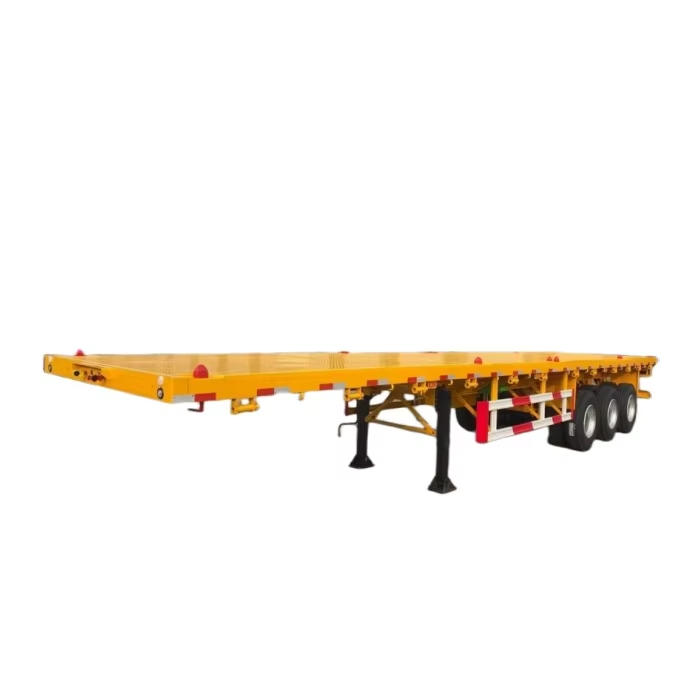
A flatbed semi trailer is one of the most versatile types of semi trailers. It features an open platform without permanent sidewalls or a roof, allowing cargo to be loaded from the side, rear, or top.
Open cargo platform
Flexible loading and unloading
Suitable for various cargo dimensions
Available in different axle configurations
Can be equipped with container locks or additional cargo-securing devices where designed for these applications
Flatbed semi trailers are commonly used to transport:
Steel coils and steel structures
Construction materials
Pipes and timber
Machinery and equipment
Palletized cargo
Compatible shipping containers
The open platform provides loading flexibility and makes it easier to handle cargo with cranes, forklifts, and other loading equipment.
Flatbed trailers are especially useful for companies that transport different types of general cargo.
Buyers should evaluate platform dimensions, payload rating, chassis strength, axle configuration, suspension, tire specifications, and cargo-securing arrangements.
If the trailer will carry 20ft or 40ft containers, confirm that it has suitable container support points and locking devices. A general flatbed platform should not automatically be treated as a purpose-built container chassis.
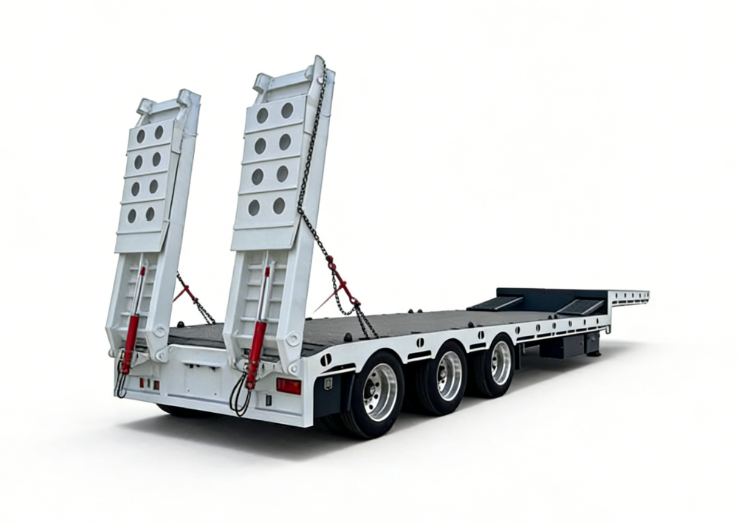
A lowbed semi trailer, also called a lowboy or low-loader in some markets, is designed to transport heavy and oversized machinery.
Its main feature is a low loading deck, which can help reduce the overall transport height of tall equipment.
Low loading platform
Heavy-duty chassis structure
Multiple axle configurations available
Loading ramps or other equipment-loading arrangements
Suitable for heavy and oversized machinery when correctly specified
Hydraulic excavators
Bulldozers
Wheel loaders
Road construction equipment
Mining machinery
Drilling rigs
Industrial equipment
| Configuration | Main Feature | Typical Application |
|---|---|---|
| Fixed Gooseneck Lowbed | Fixed front neck and low loading deck | Heavy machinery transport |
| Detachable Gooseneck Lowbed | Detachable front section for loading from the front | Suitable equipment that can be driven or winched onto the deck |
| Hydraulic Detachable Gooseneck | Hydraulic system assists neck connection and operation | Specialized heavy equipment transport |
| Multi-Axle Lowbed | Additional axle lines for load distribution | Heavy or concentrated loads requiring engineered configurations |
The low deck can help transport tall machinery while keeping the overall loaded height within available clearance limits.
Multi-axle configurations may help distribute heavy loads, subject to axle ratings, spacing, suspension design, and legal limits.
Before purchasing a lowbed semi trailer, confirm:
Equipment operating weight
Overall machine length, width, and height
Track or wheel dimensions
Center of gravity and load distribution
Deck length and width
Deck height
Ramp design and loading method
Axle capacity and configuration
Tractor compatibility
Route restrictions and special permits
A lowbed's advertised payload should not be considered sufficient evidence that it can safely or legally transport a particular machine. The complete loaded combination must be checked.
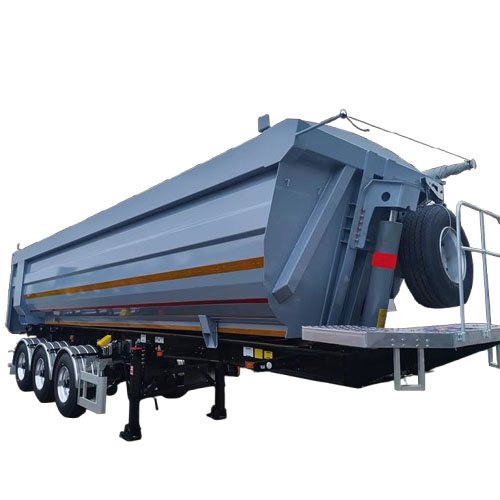
A dump semi trailer, also known as a tipping semi trailer or tipper semi trailer, is designed to transport and unload loose bulk materials using a hydraulic lifting system.
It is widely used in mining, construction, quarrying, and infrastructure projects.
Hydraulic tipping system
Reinforced cargo body
Heavy-duty chassis
Rear discharge or other specified unloading arrangement
Different body shapes and volumes available
Coal
Iron ore and other minerals
Sand and gravel
Soil and overburden
Construction waste
Aggregates
| Body Type | Main Characteristics | Typical Application |
|---|---|---|
| U-Shaped Dump Body | Curved body profile | Selected bulk materials and mining applications |
| Rectangular Dump Body | Conventional box-shaped body | General bulk material transport |
| Side Dump Body | Discharges material through a side-tipping arrangement | Selected construction and material-handling operations |
| Rear Tipping Body | Unloads material through the rear | Common bulk material transport |
A hydraulic tipping system allows bulk materials to be discharged without manually unloading the cargo. This can improve productivity at suitable unloading sites.
Important factors include:
Cargo density and abrasiveness
Required body volume
Payload and legal weight limits
Floor and sidewall material
Main beam and crossmember strength
Hydraulic cylinder and power requirements
Axle and suspension configuration
Stability during unloading
A larger body volume does not automatically mean a higher usable payload. Dense materials such as iron ore may reach the permitted weight limit before the body is full.
Tipping should only be carried out on suitable, stable ground and in accordance with the manufacturer's operating instructions.
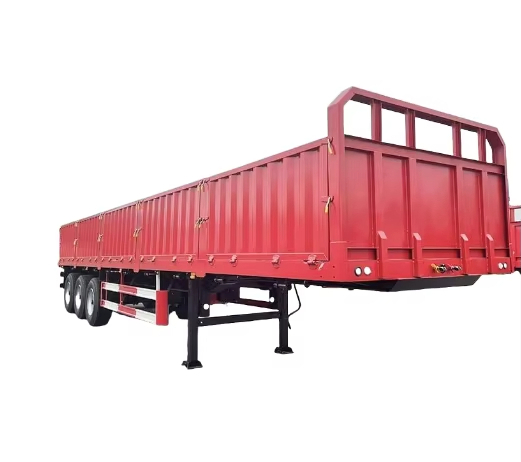
A sidewall semi trailer is a flatbed-based trailer fitted with fixed or removable side panels.
These panels help contain cargo and reduce the risk of goods falling from the platform during transportation.
Open loading platform
Metal side panels
Flexible cargo loading
Available in different sidewall heights
Suitable for general cargo and selected bulk goods
Bagged cement
Agricultural products
Steel materials
Palletized cargo
Construction materials
General freight
Sidewall trailers provide more cargo containment than a standard flatbed while retaining much of the open-platform loading flexibility.
Some models use removable or adjustable panels to accommodate different cargo requirements.
Check the sidewall height, panel thickness, hinge and locking structure, floor design, chassis dimensions, and cargo-securing equipment.
The trailer should be configured according to the type of cargo and the loading method.
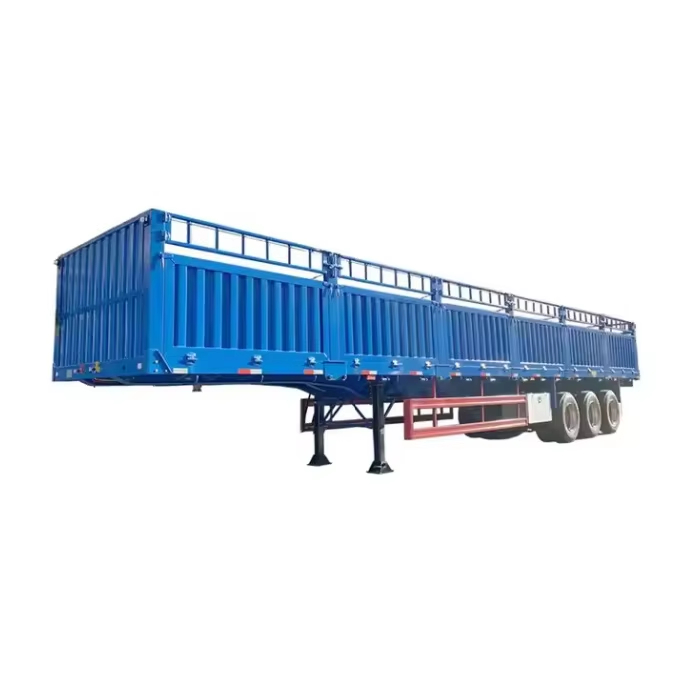
A fence semi trailer is designed with an open platform and a fence-style side structure. It is commonly used for agricultural and general cargo transportation.
Compared with a conventional sidewall trailer, a fence trailer usually has a more open side structure, with posts and rails or other fence components.
Open cargo platform
Vertical posts and fence panels
Ventilated cargo area
Suitable for various agricultural and general goods
Optional removable or adjustable fence components, depending on design
Agricultural produce
Bagged grain and fertilizer
Feed and other packaged agricultural products
Selected general cargo
Other compatible goods requiring side containment
The open fence structure provides ventilation and allows operators to load and unload suitable cargo more conveniently.
Buyers should confirm fence height, post strength, panel arrangement, floor material, load distribution, and cargo-securing requirements.
A fence trailer is not automatically suitable for transporting live animals. Livestock transportation requires a purpose-designed animal transport body with suitable ventilation, flooring, partitions, and animal-handling arrangements.
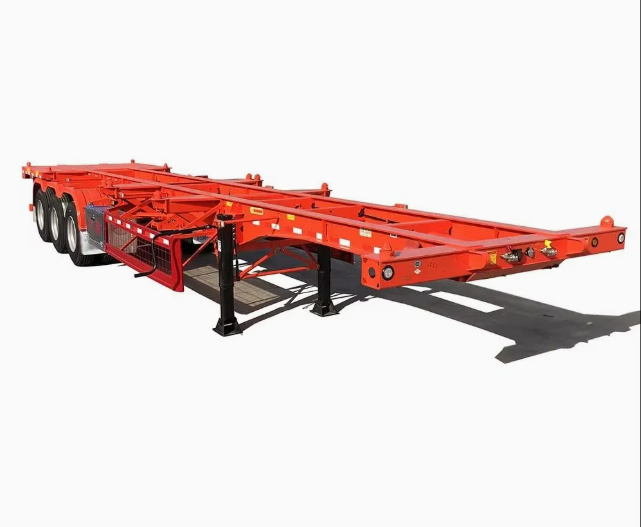
A container chassis semi trailer, also called a skeletal trailer or container trailer, is specifically designed to transport shipping containers.
Unlike a conventional flatbed trailer, it has an open skeletal frame with dedicated container support points and locking devices.
Skeletal chassis structure
Container twist locks
Designated container mounting positions
Different configurations for compatible container sizes
Available with different axle and suspension arrangements
Port container transportation
International shipping logistics
Inland container delivery
Warehouse and distribution operations
Intermodal transportation
| Container Configuration | Common Application |
|---|---|
| 20ft Container Chassis | Single 20ft container transport |
| 40ft Container Chassis | Single 40ft container transport |
| 45ft Container Chassis | Compatible 45ft container transport |
| Extendable Container Chassis | Different compatible container lengths |
| Multi-Container Configuration | Selected combinations of shorter containers, subject to chassis design and regulations |
The dedicated container locking system helps connect the container securely to the trailer. The skeletal design also avoids the weight of a full cargo platform.
Confirm container length, gross weight, locking positions, chassis rating, axle loads, tractor compatibility, and local container transport regulations.
A 20ft and 40ft container chassis may have different locking arrangements. Buyers should specify all container sizes they expect to carry.
A van semi trailer, also called a dry van trailer or box semi trailer, features a fully enclosed cargo body.
It is designed to protect goods from rain, dust, sunlight, and other external conditions.
Enclosed cargo compartment
Solid sidewalls and roof
Rear loading doors
Optional side doors or other access arrangements
Different internal dimensions and load configurations
Cartons and packaged goods
Consumer products
Furniture
Electronics
Industrial supplies
General dry freight
The enclosed body provides better weather protection and helps protect cargo from external exposure.
It is suitable for companies transporting packaged products that do not require active temperature control.
Evaluate internal dimensions, door opening size, floor capacity, body material, roof construction, cargo restraint points, and loading equipment compatibility.
A standard dry van is not a refrigerated trailer. Temperature-sensitive cargo requiring controlled conditions needs suitable insulation and refrigeration equipment.
A curtain-side semi trailer combines the general cargo-carrying function of an enclosed trailer with flexible side access.
Its side curtains can be opened to facilitate loading and unloading.
Sliding or movable side curtains
Roof and rear structure
Side-loading access
Optional sliding roof or other loading arrangements
Suitable for palletized and packaged cargo
Palletized goods
Building materials
Industrial products
Packaged consumer goods
General logistics cargo
Curtain-side trailers provide protection against ordinary weather exposure while allowing cargo to be loaded from the side when the design permits.
They can be convenient for warehouses and distribution centers that use forklifts for side loading.
Check curtain material, roof structure, side posts, load-restraint systems, floor strength, and the security requirements of the cargo.
Curtains should not be assumed to provide structural cargo restraint unless the trailer is specifically engineered and certified for that purpose.
A refrigerated semi trailer, commonly called a reefer trailer, is designed to transport temperature-sensitive goods.
It uses an insulated body and a refrigeration unit to maintain the required cargo temperature under specified operating conditions.
Insulated walls, floor, and roof
Refrigeration unit
Temperature monitoring and control
Sealed cargo compartment
Suitable airflow arrangement
Frozen meat and seafood
Fresh fruits and vegetables
Dairy products
Frozen food
Selected pharmaceutical and temperature-sensitive products
Refrigerated trailers support cold-chain transportation by helping maintain controlled cargo temperatures during delivery.
Important considerations include:
Required temperature range
Refrigeration unit capacity
Insulation performance
Cargo volume and loading arrangement
Air circulation and airflow clearance
Temperature monitoring
Maintenance support and spare parts
The refrigeration system must be selected according to the cargo, ambient conditions, journey duration, and required temperature-control performance.
A fuel tanker semi trailer is designed to transport liquid petroleum products such as diesel and gasoline, subject to the tank's approved design and applicable regulations.
Cylindrical or other engineered tank body
Compartments where specified
Manholes and valves
Loading and discharge equipment
Safety and grounding arrangements where required
Compatible tank material and internal design
Diesel transportation
Gasoline transportation
Petroleum distribution
Fuel supply for industrial and commercial operations
A tanker trailer is designed to carry liquid cargo in a dedicated tank rather than on an open platform.
Multiple compartments may allow different products or delivery quantities to be transported in one vehicle, provided the tank is designed and approved for that purpose.
Confirm:
Tank volume and compartment arrangement
Cargo compatibility
Tank material and thickness
Valve and discharge system
Manhole design
Baffles or other internal structures where required
Braking and rollover safety considerations
Applicable dangerous-goods and tanker regulations
Fuel tankers must comply with the rules applicable to the specific cargo and destination market. A tank designed for one liquid should not automatically be used for another product.
A cement tanker semi trailer, also known as a bulk cement tanker or pneumatic powder tanker, is designed to transport dry bulk materials in a sealed tank.
It commonly uses compressed air to assist material discharge.
Sealed tank body
Pneumatic discharge system
Air compressor or compatible external air supply arrangement
Discharge pipes and valves
Manholes and inspection openings
Tank design suited to dry bulk materials
Cement
Fly ash
Lime powder
Mineral powder
Other compatible dry bulk materials
The sealed tank helps protect powder cargo from moisture and external contamination. Pneumatic discharge can reduce manual handling at suitable receiving facilities.
Check tank volume, tank material, compartment design, discharge pressure and airflow requirements, compressor arrangement, discharge pipes, and cargo compatibility.
The selected tank and discharge system must be suitable for the powder's flow characteristics and the receiving facility's equipment.
A livestock semi trailer is specially designed to transport live animals, including cattle, sheep, and other suitable livestock.
Its body is configured to support animal handling, ventilation, and transportation safety.
Ventilated body structure
Animal-friendly flooring
Internal partitions where required
Loading ramps or access doors
Drainage and cleaning arrangements
Suitable internal height and space
Cattle transportation
Sheep transportation
Livestock farm operations
Agricultural distribution
A purpose-built livestock trailer provides a more appropriate environment for transporting animals than a general cargo trailer.
Buyers should check:
Animal type and average size
Required transport capacity
Internal height and floor area
Ventilation
Non-slip flooring
Partition arrangement
Drainage and cleaning
Loading and unloading equipment
Animal welfare and transport regulations
Livestock transport requirements differ between countries and may specify vehicle design, journey conditions, stocking density, and animal handling.
An extendable flatbed semi trailer is designed to transport long cargo that may exceed the length of a conventional flatbed platform.
Its deck can be extended or retracted to accommodate different cargo lengths within the trailer's engineered operating range.
Adjustable platform length
Sliding or telescopic structural arrangement
Locking mechanism for extension positions
Support points for long cargo
Different axle and suspension configurations
Long steel beams
Pipes
Wind-energy components where the trailer configuration is suitable
Structural materials
Other oversized industrial cargo
An extendable trailer can accommodate different cargo lengths without requiring a completely different trailer for every load.
Confirm the closed and extended lengths, permitted payload in each configuration, extension locking system, load-support points, cargo dimensions, and transport permits.
The maximum payload may differ between extended and retracted configurations because the load distribution and structural conditions change.
Choosing the correct semi trailer starts with understanding the cargo and the operating environment.
A trailer should not be selected only by its appearance, advertised payload, or purchase price.
The cargo determines the basic trailer category.
| Cargo Type | Recommended Trailer |
|---|---|
| Steel, pipes, and general construction materials | Flatbed Semi Trailer |
| Excavators and bulldozers | Lowbed Semi Trailer |
| Coal, ore, sand, and gravel | Dump Semi Trailer |
| Bagged goods and general cargo | Sidewall or Fence Semi Trailer |
| Shipping containers | Container Chassis Semi Trailer |
| Packaged dry freight | Van or Curtain-Side Semi Trailer |
| Frozen food and fresh products | Refrigerated Semi Trailer |
| Diesel and compatible liquid products | Fuel Tanker Semi Trailer |
| Cement and dry powder | Cement Tanker Semi Trailer |
| Cattle and sheep | Livestock Semi Trailer |
| Long industrial materials | Extendable Flatbed Semi Trailer |
Buyers should calculate the required payload and cargo dimensions before requesting a quotation.
Important information includes:
Cargo weight per trip
Cargo length, width, and height
Cargo volume or density
Center of gravity where relevant
Loading and unloading requirements
Required transport frequency
Remember that payload is not the same as body volume. Dense cargo may reach the legal weight limit before the trailer is physically full.
Axle configuration affects load distribution, vehicle handling, tire requirements, and legal compliance.
Common configurations include two-axle, three-axle, four-axle, and specialized multi-axle arrangements.
The correct configuration depends on:
Trailer design and rated capacity
Tractor configuration
Cargo weight and distribution
Axle ratings and spacing
Tire load capacity
Local axle-load regulations
More axles do not automatically mean a higher legal payload. The complete vehicle combination must comply with the applicable regulations.
Different regions and projects have different transportation conditions.
For buyers in Africa, the Middle East, and Southeast Asia, it is especially important to consider:
Paved or unpaved roads
Road surface quality
Gradients and sharp turns
Ambient temperature
Dust and moisture
Distance between service centers
Availability of spare parts
Trailer specifications should be matched to actual operating conditions rather than relying on a standard configuration for every market.
The semi trailer must be compatible with the towing tractor.
Confirm:
Fifth-wheel height
Kingpin size and rating
Tractor axle configuration
Fifth-wheel load capacity
Engine and transmission suitability for the application
Electrical and braking connections
Overall vehicle combination limits
A trailer that is suitable for one tractor may not be suitable for another without changes to the configuration.
The purchase price is only one part of the total cost of ownership.
Consider:
Initial purchase price
Fuel consumption of the complete combination
Tire replacement
Brake and suspension maintenance
Hydraulic or refrigeration system maintenance where applicable
Spare-parts availability
Downtime and repair costs
Expected service life
A well-matched trailer may provide better long-term value than a cheaper model with unsuitable specifications.
Before placing an order, review the following technical items.
| Specification | What Buyers Should Confirm |
|---|---|
| Trailer Dimensions | Overall length, width, height, and platform or body dimensions |
| Payload | Rated payload and the basis used for the rating |
| Axles | Quantity, brand, rated capacity, and spacing |
| Suspension | Mechanical or air suspension and rated configuration |
| Tires | Size, load index, speed rating, and quantity |
| Kingpin | Size, rating, and compatibility with the tractor |
| Main Beam | Material grade, dimensions, and structural design |
| Braking System | Brake configuration and applicable safety requirements |
| Landing Gear | Rated capacity and operating arrangement |
| Body Material | Material grade, thickness, and application |
| Hydraulic System | Cylinder, power supply, connections, and operating requirements where applicable |
| Electrical System | Voltage, connectors, lights, and regulatory requirements |
| Surface Treatment | Surface preparation, primer, topcoat, and corrosion protection |
| Spare Parts | Availability and after-sales support |
Ask the manufacturer to provide a detailed technical specification rather than relying only on a short product description.
Hunan Chengxin Special Vehicle Co., Ltd. focuses on semi trailer and special vehicle solutions for different transportation applications.
For overseas buyers, selecting a supplier involves more than comparing product prices. It is important to understand the manufacturer's production capabilities, product specifications, customization options, quality control, and export support.
Chengxin can discuss trailer configurations for applications including:
Flatbed and container transportation
Heavy equipment transportation
Mining and bulk material transportation
General cargo transportation
Fuel and liquid transportation
Cement and powder transportation
Livestock transportation
Specialized and project cargo
Depending on the project, buyers can discuss:
Trailer dimensions and payload requirements
Axle and suspension configurations
Main beam and body material specifications
Tire and braking system options
Hydraulic equipment
Container locking arrangements
Customized body structures
Destination-market requirements
Before production, buyers should confirm the technical drawings, specifications, component brands, inspection requirements, delivery terms, and warranty conditions.
A clear technical agreement helps reduce misunderstandings and ensures that the supplied trailer is designed for its intended application.
Common types include flatbed, lowbed, dump, sidewall, fence, container chassis, van, curtain-side, refrigerated, tanker, cement tanker, livestock, and extendable flatbed semi trailers.
A flatbed, sidewall, fence, van, or curtain-side trailer may be suitable depending on the cargo. Open-platform trailers are useful for cargo requiring crane or side loading, while enclosed trailers provide better weather protection.
A flatbed trailer has a relatively continuous open platform and is commonly used for general cargo, steel, and compatible machinery. A lowbed trailer has a lower loading deck and is designed for heavy equipment and cargo requiring reduced transport height.
A dump semi trailer is commonly used for ore, coal, sand, gravel, and overburden. A lowbed semi trailer is used to transport excavators, bulldozers, and other mining machinery. The choice depends on the specific mining operation.
A container chassis has a skeletal frame and dedicated container support and locking points. A flatbed has an open platform for general cargo. A flatbed can carry containers only when its structure and securing arrangement are suitable for that purpose.
The required number of axles depends on the payload, load distribution, trailer design, tractor compatibility, and local regulations. Three axles are common in many standard trailer applications, while heavier or specialized loads may require additional axle lines.
A fuel tanker semi trailer designed and approved for the specific petroleum product is required. Tank material, compartments, valves, discharge equipment, and applicable dangerous-goods regulations must be considered.
Some trailers are versatile. Flatbed and certain sidewall trailers can carry a range of general cargo. However, specialized products such as fuel tankers, cement tankers, refrigerated trailers, and livestock trailers are designed for specific applications and should not be treated as interchangeable.
Provide the cargo type, required payload, cargo dimensions, destination country, operating road conditions, tractor specifications, preferred axle configuration, quantity, and any special requirements.
Review the manufacturer's product range, technical specifications, production capabilities, quality inspection procedures, customization options, component sourcing, export experience, warranty terms, and after-sales support.
Understanding different semi trailer types is the first step toward choosing the right transportation equipment.
Flatbed trailers provide flexibility for general cargo, lowbed trailers are designed for heavy machinery, dump trailers support bulk material transportation, and container chassis trailers are purpose-built for shipping containers. Tanker, cement tanker, refrigerated, livestock, and other specialized trailers serve more specific industries.
The best semi trailer is not necessarily the largest or the one with the highest advertised payload. It is the trailer that matches the cargo, tractor, operating environment, legal requirements, and long-term business needs.
By comparing trailer structures, technical specifications, operating costs, and supplier capabilities, buyers can make more informed purchasing decisions.
Looking for the right semi trailer for your business? Contact Hunan Chengxin Special Vehicle Co., Ltd. with your cargo details, payload requirements, tractor specifications, and destination country. Our team can help review a suitable semi trailer configuration for your transportation project.


