
Views: 0 Author: Site Editor Publish Time: 2026-11-10 Origin: Site


Choosing the right semi trailer is an important decision for transportation companies, logistics operators, construction businesses, and industrial project contractors. The right trailer can improve transportation efficiency, reduce operating costs, and ensure safer cargo delivery.
However, international buyers often have questions about semi trailer types, load capacity, axle configurations, suspension systems, braking systems, dimensions, materials, and customization options.
In this guide, we answer the most frequently asked questions about semi trailers to help you understand their specifications and choose the right model for your transportation needs.
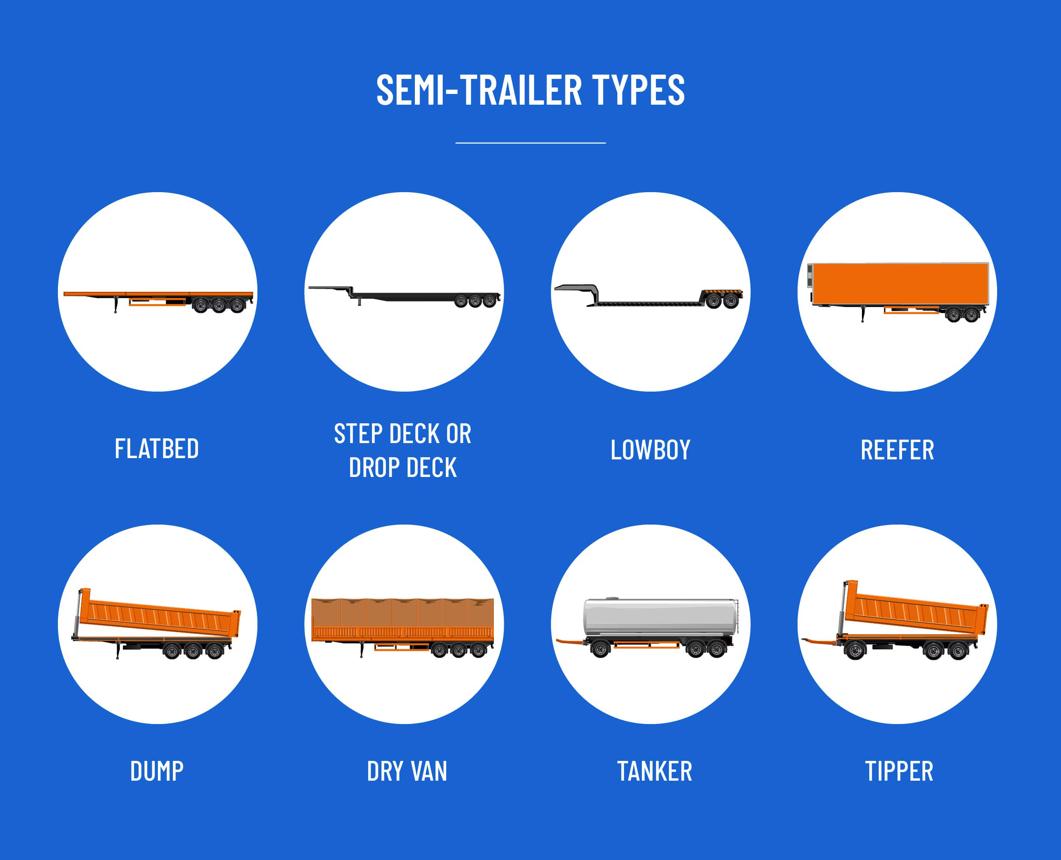
A semi trailer is a type of trailer that does not have a front axle and is designed to be connected to a truck tractor through a kingpin and fifth-wheel coupling system.
Unlike a full trailer, a semi trailer transfers part of its weight to the towing vehicle through the coupling point. The remaining weight is supported by the trailer's own axles.
Semi trailers are widely used for transporting containers, construction materials, heavy machinery, fuel, agricultural products, and other commercial cargo.
Main components of a semi trailer include:
Main frame and chassis
Kingpin and fifth-wheel coupling
Axles and suspension system
Tires and wheels
Braking system
Landing gear
Lighting and electrical system
Cargo platform, body, or tank
Different semi trailers are designed for different cargo types and transportation conditions. Choosing the right trailer depends on cargo dimensions, weight, loading methods, and road conditions.
Here are some common types:
| Semi Trailer Type | Main Application |
|---|---|
| Flatbed Semi Trailer | Containers, steel, timber, and general cargo |
| Lowbed Semi Trailer | Excavators, bulldozers, and heavy machinery |
| Sidewall Semi Trailer | Bagged goods, construction materials, and general cargo |
| Fence Semi Trailer | Livestock, agricultural products, and bulk cargo |
| Box Semi Trailer | Enclosed cargo and packaged goods |
| Curtain Side Semi Trailer | Palletized goods and logistics transportation |
| Dump Semi Trailer | Sand, gravel, coal, and construction materials |
| Fuel Tanker Semi Trailer | Diesel, gasoline, and other approved liquid fuels |
| Cement Tanker Semi Trailer | Bulk cement and powder materials |
| Container Chassis Trailer | 20ft, 40ft, and other compatible shipping containers |
When selecting a trailer, consider not only its cargo type but also the loading and unloading equipment, transportation routes, and local road regulations.
The number of axles depends on the intended payload, cargo distribution, axle load regulations, trailer design, and operating conditions.
Common configurations include 2-axle, 3-axle, and 4-axle semi trailers.
| Axle Configuration | Typical Applications | Key Considerations |
|---|---|---|
| 2 Axles | General cargo and lighter-duty transportation | Lower tare weight and fewer tires to maintain |
| 3 Axles | Heavy-duty cargo and container transportation | Common configuration with a balance of load distribution and operating cost |
| 4 Axles | Certain heavy-duty and specialized applications | More axle capacity may be available, subject to legal limits and trailer design |
Important: More axles do not automatically mean a higher legal payload. The final loading capacity must comply with local axle load limits, gross combination weight limits, and the trailer manufacturer's rated capacity.
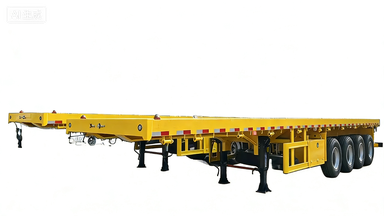
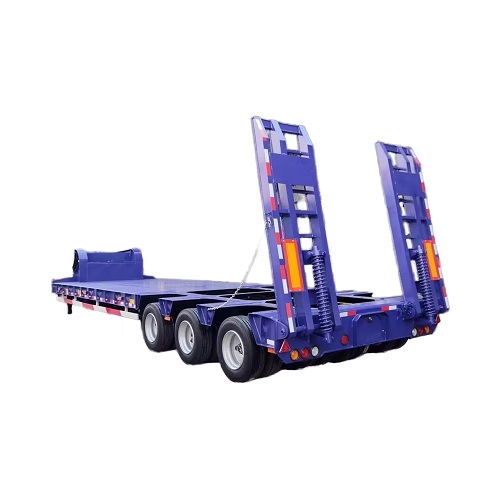
Flatbed and lowbed semi trailers are both used for cargo transportation, but they have different structural designs and applications.
| Feature | Flatbed Semi Trailer | Lowbed Semi Trailer |
|---|---|---|
| Deck Height | Relatively higher | Lower loading platform |
| Main Application | Containers and general cargo | Heavy machinery and oversized equipment |
| Loading Method | Crane, forklift, or other equipment | Ramps or specialized loading equipment |
| Typical Cargo | Containers, steel, timber | Excavators, bulldozers, cranes |
| Design | Flat cargo platform | Low deck, often with a gooseneck or detachable structure |
A flatbed trailer is suitable for general cargo and container transportation. A lowbed trailer is more suitable for tall, heavy, or oversized machinery because its lower deck can help reduce the overall transportation height.
For heavy equipment transportation, buyers should confirm the machine's operating weight, dimensions, track width, ground clearance, and loading method before selecting a lowbed trailer.
Payload capacity refers to the maximum cargo weight a trailer is designed and legally permitted to carry under the applicable operating conditions.
It is important to distinguish between three terms:
Tare Weight: The weight of the empty trailer.
Payload Capacity: The weight of the cargo that can be carried.
Gross Vehicle Weight (GVW): The combined weight of the trailer and its cargo.
For example, if a semi trailer has a tare weight of 8,000 kg and a payload of 40,000 kg, its total loaded weight is approximately 48,000 kg.
However, the actual legal payload may be lower depending on local regulations, axle load limits, tractor capacity, and road restrictions.
Before ordering, buyers should provide the expected cargo weight and transportation conditions so the manufacturer can recommend an appropriate chassis, axle configuration, suspension, tires, and braking system.
Mechanical suspension and air suspension are two common suspension systems used on semi trailers.
| Comparison | Mechanical Suspension | Air Suspension |
|---|---|---|
| Main Structure | Leaf springs and mechanical components | Air springs, valves, and related components |
| Initial Cost | Generally lower | Generally higher |
| Maintenance | Relatively simple | Requires additional pneumatic components |
| Ride Comfort | Generally firmer | Generally smoother when properly adjusted |
| Common Applications | Heavy-duty and demanding road conditions | Highway transportation and cargo requiring improved ride quality |
Mechanical suspension is widely used in many heavy-duty trailers, especially where simple maintenance and local repairability are important.
Air suspension can provide better ride comfort and help reduce vibration transmitted to the cargo. It may be suitable for highway transportation and certain sensitive cargo applications.
The best option depends on road conditions, cargo requirements, maintenance resources, and budget.
Common semi trailer axle brands include FUWA, BPW, and other regional or manufacturer-specific brands.
When selecting axles, buyers should consider:
Axle load rating
Axle brand and model
Brake type and compatibility
Spare parts availability
Local maintenance support
Operating conditions
For example, a 3-axle semi trailer may be equipped with three 13-ton axles, depending on the required specification and applicable regulations.
The axle rating should always be evaluated together with suspension capacity, tires, wheels, frame strength, and actual load distribution.
Most heavy-duty semi trailers use pneumatic braking systems, also known as air brake systems.
Common braking components include:
Brake chambers
Brake drums or disc brakes
Air reservoirs
Relay valves
ABS (Anti-lock Braking System), where specified
EBS (Electronic Braking System), where specified
ABS helps prevent wheel lock-up under certain braking conditions. EBS provides electronic control of braking functions and may offer additional vehicle control features depending on the system.
When purchasing a semi trailer, confirm that the trailer braking system is compatible with the tractor unit.
Buyers should also check local requirements for ABS, EBS, emergency braking, and other safety equipment before placing an order.
The materials used depend on the trailer type, structural design, cargo requirements, and cost considerations.
Common materials include:
| Material | Common Application | Main Characteristics |
|---|---|---|
| Q235 Steel | General structural components | Common carbon structural steel |
| Q345B Steel | Trailer frames and structural components | Commonly used in structural applications |
| Q355 Steel | Main beams and structural components | Higher-strength structural steel grade |
| High-Strength Steel | Lightweight or heavy-duty structures | Can help reduce structural weight when properly designed |
| Aluminum Alloy | Tank bodies and selected trailer structures | Lower density and corrosion-related advantages depending on alloy and application |
The main beam is one of the most important structural components of a semi trailer. Its material, height, flange thickness, web thickness, and structural design all influence the trailer's performance.
For example, a customized flatbed semi trailer may use a Q345B or Q355 steel main beam, depending on the engineering requirements.
Material selection should be based on the intended working conditions and verified engineering design rather than material grade alone.
Yes. Professional semi trailer manufacturers can customize trailers according to customer requirements and local operating conditions.
Common customization options include:
Trailer length, width, and height
Payload and axle configuration
Axle brand and load rating
Mechanical or air suspension
Tire size and quantity
Kingpin size and position
Main beam material and dimensions
Landing gear brand
Brake system configuration
Paint color and surface treatment
Special loading and unloading equipment
For example, a customer purchasing a flatbed trailer for container transportation may require 20ft and 40ft container twist locks.
A mining customer may need a heavy-duty lowbed trailer with reinforced structural components and suitable loading ramps.
Providing detailed requirements at the quotation stage helps the manufacturer prepare a more accurate technical proposal.
Different markets have different road conditions, climate conditions, vehicle regulations, and transportation requirements.
When choosing a semi trailer for export, buyers should consider the following factors:
1. Road Conditions
For rough roads, construction sites, or mining areas, buyers may need a suitable chassis structure, suspension system, tires, and ground clearance.
2. Climate Conditions
High temperatures, humidity, and coastal environments may influence material selection, paint systems, electrical protection, and maintenance requirements.
3. Local Regulations
Check the legal requirements for trailer dimensions, axle loads, total vehicle weight, lighting, braking systems, and special transport permits.
4. Spare Parts Availability
Choose axle brands, tires, brake components, and other parts that can be serviced or replaced conveniently in the destination market.
5. Tractor Compatibility
The trailer must match the tractor's fifth wheel, kingpin size, coupling height, braking connections, electrical connections, and permitted combination weight.
A suitable trailer is not simply the one with the highest rated capacity. It is the one that matches the actual cargo, tractor, road conditions, and legal requirements.
Before placing an order, buyers should carefully review the technical specifications and commercial terms.
Here is a practical checklist:
| Item | What to Confirm |
|---|---|
| Trailer Type | Flatbed, lowbed, dump, tanker, or other type |
| Dimensions | Length, width, and height |
| Payload | Required cargo weight and rated capacity |
| Axles | Number, brand, and load rating |
| Suspension | Mechanical or air suspension |
| Tires | Size, brand, quantity, and load rating |
| Braking System | Air brakes, ABS, EBS, and related components |
| Kingpin | Size and position |
| Main Beam | Material, height, and thickness |
| Landing Gear | Brand and rated capacity |
| Accessories | Spare tire carrier, tool box, lights, and other options |
| Certification | Applicable certificates and market requirements |
| Warranty | Warranty terms and after-sales support |
Buyers should request a detailed quotation, technical specification sheet, and clear confirmation of the final configuration before production begins.
Manufacturing time depends on the trailer type, order quantity, customization requirements, component availability, and factory production schedule.
Standard configurations may have shorter production lead times than customized heavy-duty trailers or specialized tanker trailers.
Before confirming an order, ask the manufacturer to provide:
Estimated production lead time
Production schedule
Inspection arrangements
Delivery and shipping arrangements
Required export documents
The production lead time should be confirmed in the sales contract.
China is an important manufacturing and export source for commercial trailers. International buyers can work directly with manufacturers or authorized export companies.
A typical purchasing process includes:
Send an Inquiry: Provide the trailer type, cargo, payload, dimensions, and destination country.
Confirm Specifications: Discuss axles, suspension, tires, brakes, materials, and optional equipment.
Receive a Quotation: Review the price, trade terms, production lead time, and payment terms.
Confirm the Order: Sign the sales contract and arrange payment according to the agreed terms.
Manufacturing: The factory manufactures the trailer according to the confirmed specifications.
Inspection: Check the finished trailer and verify its configuration before shipment.
Shipping: Arrange export procedures and transportation to the destination port.
Before importing, buyers should also confirm import duties, customs requirements, vehicle registration rules, and any applicable product certification requirements in their country.
Choosing a reliable manufacturer is just as important as choosing the right trailer configuration.
Chengxin focuses on semi trailers and special-purpose vehicles, offering a range of products for different transportation applications.
Our main product categories include:
With 20 years of industry experience, Chengxin combines manufacturing experience with international export services to support customers in Africa, the Middle East, Southeast Asia, and other markets.
We can provide customized trailer configurations according to cargo requirements, road conditions, local regulations, and customer budgets.
Whether you need a standard 3-axle flatbed trailer, a heavy-duty lowbed trailer, or a customized fuel tanker semi trailer, our team can help you evaluate the specifications and prepare a suitable quotation.
Choosing the right semi trailer requires careful consideration of cargo type, payload, dimensions, axle configuration, suspension, braking system, materials, and local regulations.
Understanding these frequently asked questions can help buyers make better purchasing decisions, avoid specification mismatches, and improve transportation efficiency.
If you are looking for a reliable semi trailer manufacturer in China, contact Chengxin to discuss your requirements and receive a customized solution.
Send us your cargo details, required payload, destination country, and preferred trailer type. Our team will help you select a suitable semi trailer and provide a detailed quotation.
Keywords: Semi Trailer, Semi Trailer Manufacturer, Semi Trailer Supplier, Types of Semi Trailers, Flatbed Semi Trailer, Lowbed Semi Trailer, Dump Semi Trailer, Fuel Tanker Semi Trailer, 3 Axle Semi Trailer, China Semi Trailer.
Q1: What is the most common semi trailer type?
Flatbed semi trailers are widely used for containers and general cargo. Other types are selected according to specific transportation needs.
Q2: How many tons can a semi trailer carry?
It depends on the trailer design, axle configuration, tractor capacity, cargo distribution, and local legal limits.
Q3: Which is better, a 2-axle or 3-axle semi trailer?
Neither is universally better. The correct choice depends on payload, axle load regulations, road conditions, and operating costs.
Q4: Can I customize a semi trailer?
Yes. Dimensions, axles, suspension, tires, braking systems, materials, and accessories can be customized according to the project requirements.
Q5: Do you export semi trailers to Africa?
Chengxin supports export inquiries for customers in Africa and other international markets. Final configurations should be confirmed according to destination-country requirements.
Email:luna@hncx168.com
What's app:+86 13787356058


