
Views: 0 Author: Site Editor Publish Time: 2026-10-27 Origin: Site


Discover the best semi trailer for mining projects. Compare dump and lowbed semi trailers, payload requirements, materials, axles, suspension, and buying tips.
There is no single semi trailer that is ideal for every mining operation. The best choice is the trailer designed for the specific cargo, route, loading method, and working conditions.
Mining transportation generally involves two different tasks:
Bulk material transportation: Moving ore, coal, sand, gravel, waste rock, and overburden.
Heavy equipment transportation: Relocating excavators, bulldozers, loaders, drilling machines, and other large equipment.
For bulk materials, a mining dump semi trailer is often a practical choice. For heavy machinery, a lowbed or lowboy semi trailer is usually more appropriate. Flatbed semi trailers can also support mining logistics when transporting steel structures, pipes, spare parts, and other general cargo.
The selection process should begin with the cargo and operating conditions rather than simply choosing the trailer with the highest advertised payload.
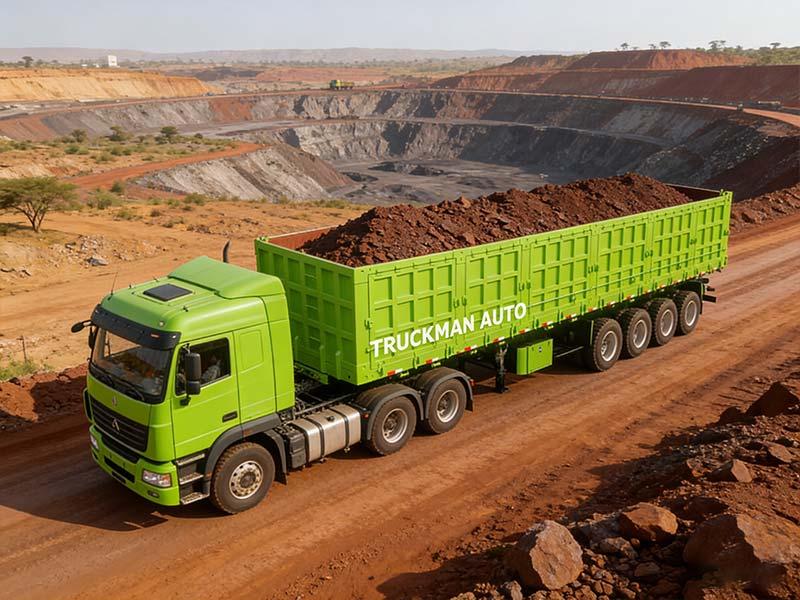
The following table compares common semi trailer types used in mining projects.
| Semi Trailer Type | Main Application | Key Advantages | Important Considerations |
|---|---|---|---|
| Dump Semi Trailer | Ore, coal, gravel, sand, and overburden | Hydraulic unloading; suitable for bulk material transport | Body wear, stability during tipping, and hydraulic capacity |
| Side Dump Semi Trailer | Selected bulk material operations requiring side discharge | Can unload laterally where the site layout supports it | Requires adequate side clearance and suitable ground conditions |
| Lowbed Semi Trailer | Excavators, bulldozers, loaders, and drilling equipment | Low loading deck and heavy-equipment transport capability | Equipment dimensions, axle distribution, ramps, and route permits |
| Flatbed Semi Trailer | Steel, pipes, mining supplies, and general cargo | Versatile cargo platform and flexible loading | Requires suitable cargo restraints and may not suit oversized or unusually heavy machinery |
| Extendable Flatbed Semi Trailer | Long pipes, structural steel, and selected oversized cargo | Adjustable deck length for compatible loads | Extended configuration changes load distribution and may require special permits |
| Multi-Axle Heavy Haul Trailer | Very heavy or concentrated loads | More axle lines can help distribute load | Requires engineered load distribution and careful route planning |
For many mining contractors, the most useful starting point is a combination of a dump semi trailer for bulk materials and a lowbed semi trailer for moving equipment.
A mining dump semi trailer is designed to carry loose bulk materials and unload them through a hydraulic tipping system.
Typical applications include:
Coal transportation
Iron ore and other mineral transportation
Sand and gravel delivery
Waste rock and overburden removal
Quarry and aggregate operations
Important features to evaluate:
Reinforced main beams and crossmembers
A body design suited to the density and abrasiveness of the cargo
Appropriate floor and sidewall thickness
A hydraulic cylinder and tipping system rated for the intended operating conditions
Suitable axle, tire, suspension, and braking configurations
A tailgate designed for the material and unloading method
For abrasive materials, buyers should pay particular attention to the wear resistance of the floor and side panels. A thicker plate is not automatically the best solution: steel grade, structural design, tare weight, maintenance requirements, and material characteristics must be considered together.
A U-shaped body may help material discharge and reduce certain areas where material can accumulate, depending on the body design and material properties. A rectangular body may be suitable for other loading and volume requirements.
A lowbed semi trailer, also called a lowboy or low-loader in some markets, is designed to transport heavy machinery with a relatively low deck.
Common cargo includes:
Hydraulic excavators
Bulldozers and crawler tractors
Wheel loaders
Drilling rigs
Crushing and screening equipment
Mining maintenance machinery
A low loading deck can help reduce the overall loaded height of the vehicle combination. This is particularly useful when transporting tall machinery, but the final permitted height depends on the machine, trailer, tractor, route, and local regulations.
Before selecting a lowbed trailer, confirm the equipment's actual operating weight, transport dimensions, track or wheel spacing, center of gravity, loading method, and required restraint points.
For especially heavy or concentrated loads, the number of axles alone does not establish safe capacity. Axle ratings, spacing, suspension, tire capacity, chassis strength, kingpin load, and load distribution must work together.
A flatbed semi trailer is useful for moving general mining cargo, including:
Steel beams and structural components
Pipes and cable reels
Spare parts and maintenance supplies
Palletized materials
Selected machinery and project cargo
Flatbeds are flexible and can be loaded from the side or top where suitable equipment is available. However, they do not provide the same low loading height as a lowbed trailer, and they require appropriate securing equipment for each cargo type.
For long materials, an extendable flatbed may be worth considering. The buyer should confirm the maximum extended length, permitted payload in each configuration, load support requirements, and local oversize transport rules.
Different materials create different demands on a trailer. Density, abrasiveness, moisture content, particle size, and loading impact can all influence the best configuration.
| Cargo or Task | Suggested Trailer | Main Selection Priority |
|---|---|---|
| Coal | Dump semi trailer | Body volume, payload, unloading efficiency, and wear protection |
| Iron ore | Heavy-duty dump semi trailer | Structural strength, floor wear resistance, and axle-load distribution |
| Copper ore and other dense minerals | Dump semi trailer engineered for the actual load | Legal payload, body loading pattern, chassis strength, and tire capacity |
| Sand and gravel | Dump semi trailer | Body capacity, hydraulic system, and efficient unloading |
| Waste rock and overburden | Reinforced dump semi trailer | Impact resistance, chassis durability, and operating-cycle demands |
| Excavators and bulldozers | Lowbed semi trailer | Machine dimensions, deck height, ramp design, and load restraint |
| Drilling rigs and specialized machinery | Lowbed or engineered heavy-haul trailer | Concentrated loads, transport dimensions, route clearance, and permits |
| Pipes and steel structures | Flatbed or extendable flatbed | Cargo length, support points, securing equipment, and permitted dimensions |
Important: Body volume is not the same as payload. Dense minerals can reach the trailer's permitted weight limit before the body is full. Buyers should calculate the expected cargo weight using realistic bulk density and loading conditions, then confirm compliance with applicable vehicle and road limits.
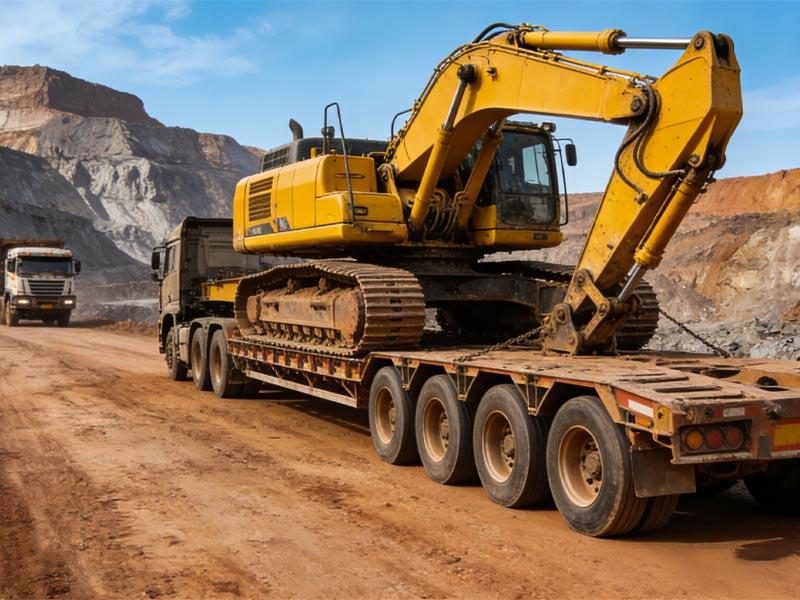
Payload requirements should be calculated from the actual cargo weight and the applicable legal limits.
A trailer advertised with a certain payload rating may not be permitted to carry that amount on every public road or in every country. The legal payload of a complete tractor-trailer combination depends on factors such as gross combination weight, axle loads, axle spacing, tire ratings, and national or regional regulations.
When evaluating axle configurations, check:
Rated capacity of each axle
Number and spacing of axles
Tire load index and tire quantity
Suspension load rating
Kingpin load and tractor compatibility
Chassis and crossmember design
Legal axle loads and gross vehicle limits on the intended route
Additional axles can help distribute loads, but they also affect tare weight, maneuverability, tire costs, and maintenance. The right configuration should be engineered for the project rather than chosen only by axle count.
The chassis transfers loads from the cargo through the suspension and axles to the road. Mining operations may expose it to repeated loading cycles, uneven surfaces, vibration, and impact.
When reviewing the chassis, ask the manufacturer for details about:
Main beam structure and dimensions
Steel grade and certified material specifications
Crossmember spacing and reinforcement
Welding procedures and inspection practices
Stress concentrations around suspension brackets and other attachment points
Corrosion protection and paint system
High-strength structural steels may help balance strength and tare weight when properly designed. Wear-resistant steel can be beneficial for dump body floors and side panels exposed to abrasive minerals. These materials are not interchangeable: structural strength, impact resistance, hardness, weldability, and wear performance serve different purposes.
The final material specification should match the trailer's intended duty cycle and be confirmed in the technical quotation.
Mechanical and air suspension systems each have appropriate applications.
| Feature | Mechanical Suspension | Air Suspension |
|---|---|---|
| General design | Leaf springs and mechanical linkages | Air springs with associated control components |
| Common consideration | Relatively straightforward construction and service | Ride characteristics and height control, depending on system |
| Maintenance | Inspection of springs, bushings, U-bolts, and balance components | Inspection of air springs, valves, airlines, and control components |
| Suitability | Can be suitable for demanding routes when correctly specified | Can be suitable for highway-oriented operations and compatible applications |
| Main decision factor | Road conditions, load cycles, service support, and parts availability | Road conditions, axle loads, system complexity, and service support |
Neither system is universally superior for mining. A mechanical suspension is not automatically more durable, and an air suspension is not automatically unsuitable for rough roads. Selection should consider the actual road profile, trailer design, maintenance capability, and manufacturer's rating.
Mining routes can involve gravel, sharp rocks, dust, mud, heat, and long braking cycles. Tire and brake specifications should therefore match the operating environment.
Check the following before purchase:
Tire size, load index, and speed rating
Tire type and availability of replacements near the mine
Wheel ratings and compatibility
Brake configuration and compatibility with the tractor
ABS or other required braking systems where applicable
Availability of replacement brake chambers, hoses, and other service parts
A suitable tire is not simply one with the largest size. Its load rating, construction, operating speed, terrain, and compatibility with the wheel and axle must all be confirmed.
For dump trailers, the hydraulic system is essential to safe and consistent unloading.
The system should be selected according to the loaded body, material characteristics, tipping geometry, operating cycle, and manufacturer's engineering calculations.
Ask the supplier to confirm:
Cylinder model and rated operating parameters
Hydraulic power source and tractor compatibility
Required hydraulic connections
Tipping angle and body stability requirements
Hose routing and protection
Maintenance and inspection recommendations
Never assume that a larger cylinder alone guarantees a safer tipping operation. Loading distribution, ground slope, material sticking to the body, wind, and the condition of the tipping area can affect stability. The trailer should be operated according to the manufacturer's instructions on a suitable, stable surface.
A mining trailer may travel between public highways, access roads, processing areas, and active mine sites. These routes can differ substantially in surface quality, gradient, turning radius, and drainage.
| Operating Condition | What to Evaluate |
|---|---|
| Rough or unpaved roads | Chassis design, suspension ratings, tire construction, and ground clearance |
| Steep gradients | Tractor performance, braking capacity, retarder or auxiliary braking where applicable, and route safety |
| Tight turns | Overall length, axle layout, turning clearance, and maneuverability |
| Muddy or wet access roads | Tire suitability, drainage, traction, and safe operating procedures |
| Long-distance public-road transport | Legal weights and dimensions, braking compliance, tires, and driver requirements |
| Remote mining locations | Spare parts availability, service access, and ease of maintenance |
| High ambient temperatures or dusty environments | Component temperature limits, filtration, inspection frequency, and protective routing |
Trailer selection cannot compensate for unsafe roads. Mine operators should also assess road width, drainage, grades, sight distance, berms, and traffic controls. The U.S. Mine Safety and Health Administration highlights these factors as important haul-road safety considerations. Requirements and guidance differ by jurisdiction and type of mine.
The purchase price is only one part of a trailer's total cost. A mining fleet also incurs costs for tires, brakes, hydraulic components, repairs, fuel attributable to the complete vehicle combination, and downtime.
Consider these practices when specifying a trailer:
Match the trailer to the cargo. Avoid using a general-purpose flatbed for work that requires a purpose-designed lowbed or dump trailer.
Balance tare weight and durability. Excessive weight can reduce useful payload, while inadequate structural design can increase repair costs.
Specify wear protection where it is needed. Abrasive cargo may justify a wear-resistant body floor or replaceable wear components.
Choose serviceable components. Check local access to replacement tires, brake parts, suspension parts, hydraulic seals, and other consumables.
Plan preventive maintenance. Follow the manufacturer's service intervals and increase inspections when operating conditions demand it.
Train operators. Correct loading, cargo restraint, tipping, braking, and driving practices help prevent avoidable damage.
Measure downtime. A low purchase price may not be economical if the trailer frequently needs repairs or parts are difficult to obtain.
A useful comparison is total cost of ownership over the expected service period, not the initial quotation alone.
Both new and used trailers can be appropriate, depending on budget, operating hours, availability, and project duration.
| Factor | New Semi Trailer | Used Semi Trailer |
|---|---|---|
| Initial purchase cost | Usually higher | May be lower |
| Specification | Can be built to project requirements | Existing configuration may limit suitability |
| Condition history | New equipment with documented build specifications | Must be assessed through inspection and records |
| Customization | More options before production | Modifications may be costly or impractical |
| Delivery | Depends on production and shipping schedule | May be available sooner if suitable stock exists |
| Main risk | Incorrect specification or delivery planning | Hidden wear, fatigue, corrosion, or component damage |
For a used mining trailer, inspect the main beams, crossmembers, suspension mounts, axle housings, wheels, braking system, kingpin, landing gear, body floor, hydraulic cylinder, and weld-repair history. Check for deformation, cracks, severe corrosion, uneven tire wear, and signs of overloading.
A professional inspection is recommended before purchase, especially when the trailer will operate in a demanding mining environment.
Before requesting a quotation, prepare the following information so that suppliers can recommend a suitable configuration.
| Information Needed | Details to Provide |
|---|---|
| Project location | Country, mine site, and destination port if imported |
| Cargo type | Ore, coal, overburden, machinery, steel, or other cargo |
| Cargo weight | Typical and maximum weight per trip |
| Cargo dimensions or volume | Length, width, height, or required body volume |
| Operating route | Public highway, mine access road, or off-road site |
| Road conditions | Surface, gradients, turning radius, and seasonal conditions |
| Loading method | Loader, excavator, crane, drive-on ramps, or other equipment |
| Unloading method | Rear tipping, side tipping, crane unloading, or other method |
| Tractor specification | Make, model, axle configuration, fifth-wheel height, and rated capacity |
| Required regulations | Permitted dimensions, axle loads, braking requirements, and import approvals |
| Quantity and schedule | Number of units and expected delivery date |
| Service requirements | Spare parts, warranty, technical documentation, and after-sales support |
Providing this information helps the manufacturer assess whether a standard configuration is suitable or whether a customized trailer is required.
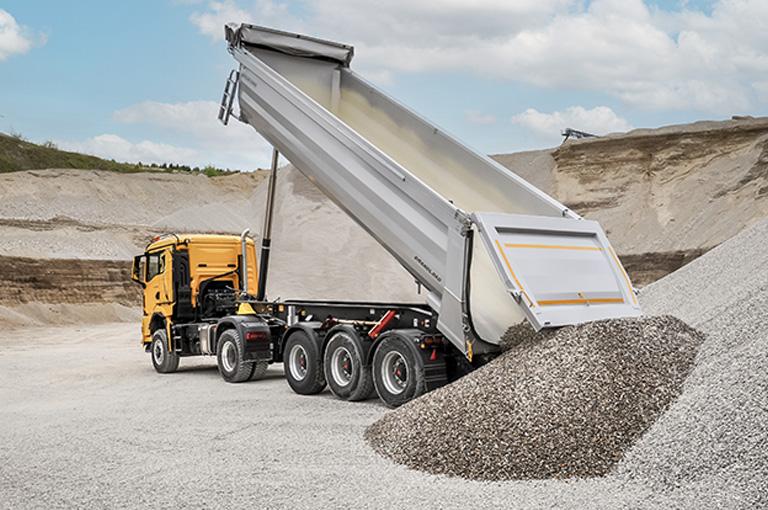
For mining companies and contractors sourcing trailers from China, the supplier should be able to discuss both product specifications and the intended working environment.
When evaluating Hunan Chengxin Special Vehicle Co., Ltd., buyers can request a technical review covering:
Dump semi trailers for bulk materials
Lowbed semi trailers for mining machinery
Flatbed and extendable trailers for project cargo
Axle, suspension, tire, and braking configurations
Chassis materials and body wear-protection options
Hydraulic system specifications for tipping trailers
Custom dimensions and equipment arrangements, subject to engineering review
Export documentation, shipping arrangements, and spare-parts planning
Before placing an order, request a written technical specification, confirmed payload basis, component list, drawings where appropriate, inspection plan, warranty terms, and a clear quotation covering the agreed delivery scope.
The final configuration should be confirmed against the tractor, cargo, route, and applicable legal requirements. A supplier's recommendation should be based on these details rather than on a generic payload figure.
For transporting bulk materials such as ore, coal, and overburden, a suitably engineered dump semi trailer is often a practical choice. For excavators, bulldozers, and other heavy machinery, a lowbed semi trailer is generally more suitable. The final choice depends on cargo, road conditions, loading methods, and legal limits.
It can be, provided the trailer is designed for the material's density, abrasiveness, and loading impact. Buyers should verify payload, body volume, floor wear resistance, axle loads, tire capacity, and legal weight limits. Dense ore can reach the weight limit before the body is full.
The choice depends on the intended payload, axle ratings, load distribution, tractor configuration, and applicable road regulations. A 4-axle trailer is not automatically legal for a higher payload in every jurisdiction. Ask the manufacturer to confirm the rated configuration and check the permitted loads on the intended route.
There is no universal answer. Mechanical and air suspension systems should be compared against the road conditions, duty cycle, load rating, maintenance resources, and availability of replacement parts. The selected system must be rated for the actual application.
The appropriate steel depends on whether the component is a load-bearing structural member or a material-contact surface. Structural steel is selected for strength and design requirements, while wear-resistant steel may be used in floors or side panels exposed to abrasive cargo. The supplier should identify the grade and intended application of each material.
Potentially, yes, if the trailer's rated capacity, deck dimensions, axle arrangement, loading method, and restraint system suit the machine. Overall height, width, length, axle loads, route clearances, and permits must be checked before transport.
Provide the cargo or machine details, weight and dimensions, operating route, road conditions, tractor specification, required quantity, destination, and applicable regulations. For dump trailers, also specify the material, desired body volume, and unloading method.
The best semi trailer for mining projects is the one that matches the actual cargo, operating environment, tractor, and transport regulations.
A dump semi trailer is commonly suited to bulk material transportation, a lowbed semi trailer is designed for heavy mining machinery, and a flatbed semi trailer can support general mining logistics. Buyers should evaluate payload, axle loads, chassis design, wear resistance, suspension, tires, braking, hydraulic systems, maintenance, and total operating cost before making a decision.
By preparing clear technical requirements and working with a supplier that can review the application in detail, mining companies can make more informed purchasing decisions and select equipment that supports reliable, efficient transportation.
Looking for a semi trailer for your mining project? Contact Hunan Chengxin Special Vehicle Co., Ltd. with your cargo details, required payload, tractor specification, operating conditions, and destination. Our team can review your requirements and discuss a suitable trailer configuration.


