
Views: 0 Author: Site Editor Publish Time: 2026-10-13 Origin: Site


Learn how to choose the right HOWO dump truck for construction, mining, and material transport. Compare 6×4 and 8×4 models, engine power, payload, dump body, and key buying factors.
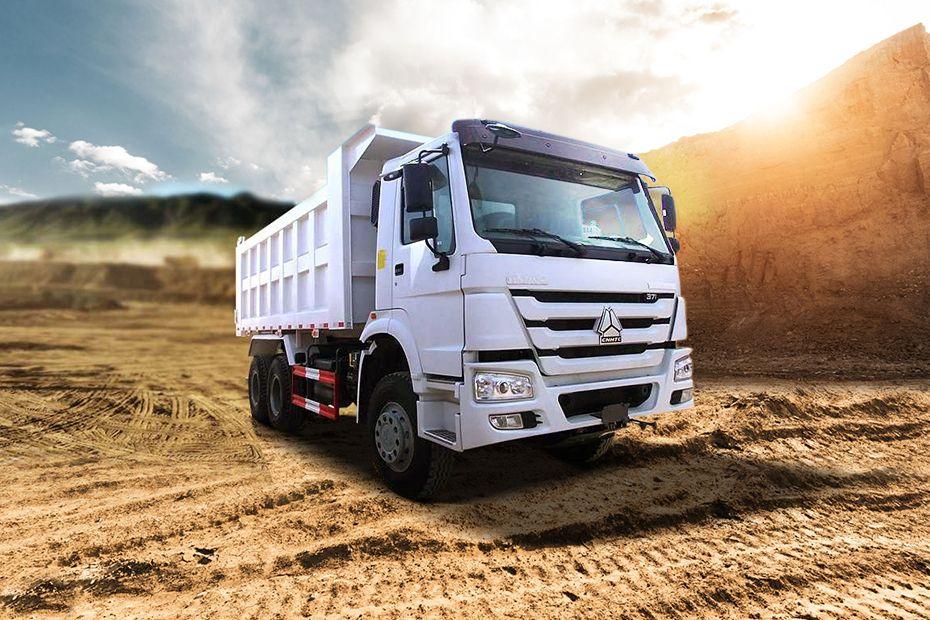
A dump truck is an essential piece of equipment for construction, mining, quarrying, road building, and bulk material transportation. The right vehicle can improve hauling efficiency, reduce unnecessary downtime, and help control operating costs.
HOWO dump trucks, produced under the SINOTRUK brand, are available in different configurations for various working conditions. Depending on the model and specification, buyers may choose different engine outputs, axle layouts, transmissions, cargo body dimensions, and emission standards.
However, the best HOWO dump truck is not necessarily the truck with the highest horsepower or largest cargo body. It is the truck whose configuration matches the actual workload, road conditions, legal requirements, and maintenance resources.
Before requesting a quotation, buyers should define the materials to be transported, the average payload per trip, the distance between loading and unloading points, and the conditions in which the truck will operate.
A HOWO dump truck transports loose or bulk materials and unloads them by raising its cargo body with a hydraulic lifting system. Common applications include:
Construction projects: transporting sand, gravel, soil, and construction waste.
Mining operations: hauling ore, rock, and mineral materials.
Quarrying: moving crushed stone, aggregates, and other heavy materials.
Road construction: carrying asphalt-related materials, base materials, and excavated soil, depending on the vehicle and body specification.
Infrastructure projects: supporting earthmoving, site preparation, and drainage construction.
Municipal and commercial operations: transporting bulk materials for landscaping, demolition, and other projects.
The correct configuration depends on the material density, loading equipment, unloading frequency, terrain, travel distance, and whether the truck operates on public roads or within a controlled worksite.
Drive configuration is one of the most important factors when selecting a HOWO dump truck.
A 6×4 truck typically has three axles, with two rear axles driven. An 8×4 truck typically has four axles, with two rear axles driven. Both configurations are available in different model series and specifications.
| Feature | HOWO 6×4 Dump Truck | HOWO 8×4 Dump Truck |
|---|---|---|
| Typical axle layout | 3 axles | 4 axles |
| Driven axles | 2 rear axles | 2 rear axles |
| Typical application | General construction and medium-to-heavy hauling | Larger construction projects, quarries, and suitable heavy-duty applications |
| Maneuverability | Generally easier in more confined areas | Longer vehicle and potentially larger turning space requirement |
| Load distribution | Distributed across 3 axles | Distributed across 4 axles |
| Cargo body | Selected according to material and payload | Often configured for larger cargo body requirements |
| Purchase and operating cost | May be lower, depending on specification | May be higher, depending on specification |
| Best selection basis | Workload, route, payload, and local limits | Workload, route, payload, axle ratings, and local limits |
Published HOWO model specifications illustrate that 6×4 and 8×4 trucks can have different overall dimensions, curb weights, and rated capacities. Actual values vary by model and configuration. SINOTRUK product specifications
A 6×4 model is worth considering when:
The truck mainly transports soil, sand, gravel, or similar materials.
The project involves regular construction work or short-cycle hauling.
The worksite has relatively limited turning space.
The required payload can be handled within the truck's rated limits.
The buyer wants to balance hauling performance, vehicle size, and operating costs.
An 8×4 model may be more appropriate when:
The project requires a larger cargo body or greater permitted payload.
The truck works on large construction sites or in suitable quarry operations.
The planned load and route justify the additional axle configuration.
The vehicle can comply with applicable axle-load, gross-weight, and road regulations.
Important: An 8×4 configuration does not automatically authorize a higher payload. The legal payload depends on the vehicle's rated gross weight, curb weight, axle ratings, registration, and destination-country regulations.
Payload and cargo body volume are related, but they are not the same thing.
Payload is the weight of the material the vehicle is permitted to carry.
Cargo body volume is the geometric volume available for the load.
Gross vehicle weight (GVW) is the total permitted or rated weight of the loaded vehicle, as defined by the applicable vehicle specification and regulations.
Curb weight is the weight of the vehicle in its specified unladen condition.
A large cargo body may be useful for light materials, but dense materials can reach the permitted payload limit before the body is full.
A basic estimate is:
Required cargo volume = Target material weight ÷ Bulk density
For example, if the target material weight is 12 tonnes and the assumed bulk density is 1.5 tonnes per cubic metre:
12 ÷ 1.5 = 8 m³
This is only a planning estimate. Actual bulk density changes with moisture, particle size, compaction, and material composition. Always check the real material and vehicle ratings before loading.
| Material | Main selection consideration | Recommended buying approach |
|---|---|---|
| Sand | Bulk density and moisture | Calculate both volume and weight |
| Soil | Moisture content and density variation | Avoid assuming every load weighs the same |
| Gravel | Particle size and impact on the body | Review floor and side-wall durability |
| Crushed stone | High density and abrasive contact | Check body material, thickness, and reinforcement |
| Ore | Density, abrasion, and impact loading | Confirm chassis, axle, tire, and body suitability |
| Construction waste | Irregular dimensions and uneven loading | Check loading method, body shape, and safe weight distribution |
When choosing a dump body, confirm:
Internal length, width, and height.
Geometric volume in cubic metres.
Floor plate and side-wall material and thickness.
Reinforcement and structural design.
Rear-door design and opening mechanism.
Compatibility with the hydraulic lifting system.
Resistance to abrasion and impact from the intended materials.
For heavy rock or ore, body durability and impact resistance may be more important than maximizing volume. For lighter materials, a larger body may improve productivity, provided the truck remains within its permitted weight limits.
Engine power influences acceleration, climbing ability, and the truck's ability to work under load. However, horsepower should be evaluated together with torque characteristics, transmission ratios, axle ratios, vehicle weight, and the intended route.
HOWO dump truck specifications vary by model series and market. Published configurations include different engine outputs and emission standards, so buyers should not assume every HOWO truck has the same powertrain. Reference: SINOTRUK HOWO dump truck models
| Operating condition | What to prioritize |
|---|---|
| Relatively flat construction roads | Appropriate engine output, fuel economy, and suitable gearing |
| Hilly or mountainous routes | Torque delivery, transmission ratios, cooling, and gradeability |
| Frequent stop-and-go hauling | Low-speed drivability, clutch or transmission durability, and cooling |
| Mining and quarry work | Powertrain suitability for sustained loads and rough terrain |
| Long operating shifts | Reliability, serviceability, and fuel consumption under actual duty cycles |
A manual transmission may suit operations where drivers are experienced with heavy vehicles and the fleet prefers a familiar, serviceable system. Automated or automatic options may be available on selected models, depending on the configuration.
Before placing an order, confirm:
Transmission manufacturer and model.
Number of forward and reverse gears.
Compatibility with engine torque.
Power take-off (PTO) requirements for the hydraulic system.
Availability of replacement parts and maintenance support.
Do not choose an engine solely by its advertised horsepower. Ask the supplier to match the engine and transmission to the load, terrain, operating hours, and expected hauling cycle.
Axles, suspension, and tires determine how the vehicle carries its load and responds to different road surfaces.
For trucks operating on rough construction roads, unpaved mine roads, or routes with frequent potholes, buyers should evaluate the entire chassis system rather than focusing on one component.
Check the front and rear axle models, rated capacities, axle ratios, and differential-lock availability where applicable. The ratings must be compatible with the intended load and the vehicle's gross weight.
Leaf-spring suspension is commonly used on heavy-duty dump trucks. The appropriate suspension specification depends on the vehicle model, operating environment, load, and manufacturer recommendations.
For rough roads, confirm that the suspension and chassis are designed for the expected duty cycle. A reinforced specification may be appropriate for some applications, but it must be engineered as a compatible system.
Tire selection should account for:
Tire size and load index.
Road surface and expected operating speed.
Resistance to cuts, punctures, and abrasion.
Availability of replacement tires in the destination market.
Compatibility with the wheels and axle configuration.
| Working environment | Tire and chassis considerations |
|---|---|
| Paved urban roads | Road suitability, load rating, and service life |
| Construction sites | Traction, durability, and resistance to site debris |
| Gravel roads | Tread pattern and puncture resistance |
| Mining and quarry roads | Application-specific tire rating, impact resistance, and axle suitability |
| Muddy or uneven terrain | Traction, ground clearance, and appropriate drive configuration |
The best tire is not necessarily the largest tire. The correct choice must match the vehicle specification, load, terrain, and local replacement supply.
The hydraulic system raises the cargo body to discharge material. Because unloading may occur repeatedly throughout the working day, the system must be properly matched to the body, load, chassis, and working cycle.
Hydraulic cylinder and lifting arrangement.
Hydraulic pump and power take-off.
Oil tank, hoses, fittings, and seals.
Control valve and operating controls.
Rated operating pressure and system compatibility.
Manufacturer-recommended maintenance requirements.
Different truck models may use different lifting arrangements. The appropriate design depends on the chassis, body dimensions, load distribution, and manufacturer's engineering specification.
When reviewing a quotation, ask for the hydraulic system manufacturer and model, the lifting arrangement, and confirmation that the system is designed for the specified body and permitted load.
Safety note: Never work beneath a raised dump body unless the vehicle is secured and the approved mechanical body-support procedure is followed. Hydraulic pressure alone must not be treated as a safe support.
The dump body affects durability, tare weight, payload potential, and maintenance costs.
A thicker plate is not automatically better for every application. Increasing thickness can add vehicle weight, which may reduce the available payload under a fixed gross-weight limit. The correct specification should balance structural strength, abrasion resistance, impact resistance, and vehicle weight.
| Component | Information to request | Why it matters |
|---|---|---|
| Floor plate | Material grade and thickness | Handles load impact and abrasion |
| Side walls | Material grade and thickness | Resists material pressure and wear |
| Front wall | Reinforcement and structural design | Handles load movement during transport |
| Rear door | Opening type, sealing, and locking arrangement | Supports safe, efficient unloading |
| Subframe and supports | Structural design and welding quality | Transfers body loads to the chassis |
| Body shape | U-shape, rectangular, or other design | Affects discharge behavior and material flow |
For abrasive materials such as crushed stone and ore, discuss wear-resistant steel and reinforcement with the manufacturer. The final design should be based on the actual cargo and duty cycle rather than a generic thickness claim.
Export buyers must confirm that the truck can be registered and operated in the destination country.
Different HOWO models may be offered with different emission configurations. The required standard depends on destination-country regulations and project requirements.
Before ordering, confirm the engine model, emission documentation, and whether the configuration is acceptable for import and registration. Do not rely on a general statement such as “Euro II–Euro V available”; verify the exact standard of the individual vehicle.
Steering position must match local rules and the customer's operating requirements.
Left-hand-drive (LHD) trucks are commonly used in right-hand-traffic markets.
Right-hand-drive (RHD) trucks may be required or preferred in left-hand-traffic markets.
Traffic direction alone does not replace registration checks. Confirm the specific country's requirements before production or shipment.
Depending on the destination, buyers may need to verify:
Vehicle identification number (VIN) and chassis documentation.
Engine and emission information.
Certificate of origin or other trade documents.
Pre-shipment inspection requirements.
Import permits, conformity documents, or local registration approvals.
Applicable vehicle dimensions, weight limits, and safety equipment.
These requirements vary by country and can change. Obtain confirmation from the local authority, importer, or customs broker before finalizing the order.
Both new and used trucks can be suitable, depending on budget, operating hours, maintenance capability, and project duration.
| Factor | New HOWO Dump Truck | Used HOWO Dump Truck |
|---|---|---|
| Initial purchase cost | Usually higher | Often lower |
| Vehicle history | New vehicle documentation | Requires careful verification |
| Wear and tear | Generally minimal at delivery | Depends on age, usage, and maintenance |
| Configuration options | May allow specification customization | Usually limited to available stock |
| Delivery | Depends on stock or production schedule | Depends on stock and inspection |
| Maintenance uncertainty | Generally lower initially | Can be higher if service history is incomplete |
| Warranty | Depends on the written sales terms | May be limited or unavailable |
Before purchasing a used truck, request:
The manufacturing year and vehicle identification details.
Maintenance and service records, where available.
Engine, transmission, and axle inspection results.
Evidence of chassis cracks, repairs, or deformation.
Inspection of the dump body, hydraulic cylinder, and hoses.
Tire condition and brake-system condition.
Odometer reading and supporting history, where available.
A cold-start test and road test where practical.
Current photographs and a continuous inspection video.
Written confirmation of the agreed vehicle condition and included equipment.
For used trucks, the purchase price should be considered together with expected repairs, parts replacement, and the time required to put the vehicle into service.
There is no single price for all HOWO dump trucks. The final quotation depends on the exact model and specification, vehicle condition, and delivery terms.
The main price factors include:
6×4 or 8×4 configuration.
Engine model, power output, and emission standard.
Transmission and axle specifications.
Dump body dimensions, material, and thickness.
Hydraulic lifting system.
Tire brand, size, and quantity.
Cab configuration, air conditioning, and optional equipment.
New or used condition.
Spare parts, warranty, and after-sales arrangements.
Shipping, insurance, import duties, and local taxes.
For an export purchase, the overall budget may include:
| Cost item | What to confirm |
|---|---|
| Vehicle price | Exact configuration and included equipment |
| Inland transport | Delivery to the export port, if applicable |
| Export documentation | Which documents are included |
| Shipping and insurance | Shipping method, route, and insurance coverage |
| Customs and duties | Destination-country charges |
| Local registration | Inspection, certification, and registration costs |
| Spare parts | Initial stock and future availability |
| Maintenance | Routine servicing and likely wear parts |
| Operator and fuel costs | Expected operating conditions and usage |
Ask suppliers to quote the same specification and the same Incoterms where possible. Otherwise, two quotations may not be directly comparable.
Before confirming an order, buyers should review the vehicle specification and agree on inspection criteria in writing.
Confirm the exact model and chassis configuration.
Verify engine model, horsepower, and emission standard.
Confirm transmission and axle specifications.
Check rated gross vehicle weight and permitted payload.
Confirm cargo body dimensions, volume, and plate specifications.
Check hydraulic lifting operation and visible leaks.
Inspect tires, wheels, brakes, and suspension.
Check steering, lighting, instruments, and safety equipment.
Verify the steering position and required optional equipment.
Confirm VIN and engine identification details.
Verify the commercial invoice, packing list, and agreed shipping documents.
Confirm the destination country's import and registration requirements.
Agree on inspection photos, videos, or third-party inspection where needed.
Confirm warranty coverage, exclusions, and claim procedures in writing.
Confirm spare parts availability and technical support arrangements.
Review payment terms, production or delivery schedule, and shipment terms.
A signed specification sheet and clear inspection criteria help reduce misunderstandings between the buyer and supplier.
Higher horsepower does not automatically mean better performance for every job. Engine output must match the transmission, axle ratio, vehicle weight, and route.
A body that can hold a large volume of material may reach the permitted weight limit before it is full. Calculate both volume and weight.
A truck designed for regular construction roads may not be the best choice for severe mining conditions. Discuss road gradients, surface quality, mud, potholes, and operating hours with the supplier.
A vehicle that cannot meet destination-country requirements may face import or registration problems. Confirm the exact engine and documentation before ordering.
Two trucks may look similar but differ in engine, axles, body steel, tires, hydraulic components, and optional equipment. Compare line by line.
Limited access to spare parts can increase downtime. Confirm the parts list, technical support, warranty conditions, and service options before purchase.
For overseas buyers, a suitable supplier should do more than provide a price. The supplier should help clarify the intended application, match the truck specification to the project, and confirm export and delivery details.
When evaluating a supplier, consider:
Experience with the destination market.
Ability to provide clear, itemized technical specifications.
Access to product photographs, inspection videos, and documentation.
Transparent quotation and payment terms.
Realistic production and delivery schedules.
Spare parts availability and after-sales communication.
Willingness to confirm the agreed configuration in writing.
Hunan Chengxin Special Vehicle Co., Ltd. supports commercial vehicle export enquiries and can help buyers clarify application requirements, compare suitable configurations, and prepare a quotation based on the requested specification.
To receive a more accurate proposal, provide your destination country, required quantity, preferred drive configuration, material type, expected payload, road conditions, and any mandatory emission or registration requirements.
It can be suitable for many construction applications, including earthmoving and aggregate transport. The final choice depends on the permitted payload, route, material, terrain, and truck specification.
No. An 8×4 model may offer advantages for certain high-volume or heavy-duty applications, but it can have a higher purchase cost and different maneuverability requirements. Choose according to the project rather than axle count alone.
Estimate the required volume using the target material weight and its bulk density. Then verify the truck's payload, gross weight, and legal axle loads. Material density and moisture can significantly change the result.
There is no universal best horsepower rating. Engine power should be selected according to the loaded vehicle weight, gradients, hauling distance, operating cycle, transmission, and fuel requirements.
Some models and configurations may be available with right-hand drive. Availability must be confirmed for the specific model, and the configuration must comply with the destination country's requirements.
A new truck may offer a clearer service history and more configuration options. A used truck may reduce the initial cost but requires careful inspection of the engine, chassis, transmission, hydraulic system, and maintenance history.
Provide the destination country, quantity, new or used preference, 6×4 or 8×4 configuration, required payload, material type, engine and emission requirements, steering position, and expected working conditions. If you have a preferred model or specification sheet, include it with your enquiry.
Choosing the right HOWO dump truck begins with understanding the actual job. Buyers should compare 6×4 and 8×4 configurations, calculate payload and cargo volume separately, match engine and transmission performance to the route, and review the dump body, axles, tires, and hydraulic system.
For international purchases, emission compliance, steering position, export documentation, spare parts availability, and total landed cost are equally important.
A detailed specification review before ordering can help buyers avoid costly mismatches and select a truck suited to their construction, mining, or material transport operations.
Looking for a HOWO dump truck for your project? Contact Hunan Chengxin Special Vehicle Co., Ltd. with your requirements to discuss a suitable configuration and request a quotation.


