
Views: 0 Author: Site Editor Publish Time: 2026-10-22 Origin: Site


Discover how Chengxin exports semi trailers to Africa, from trailer customization and quality inspection to shipping, export documents, and delivery.
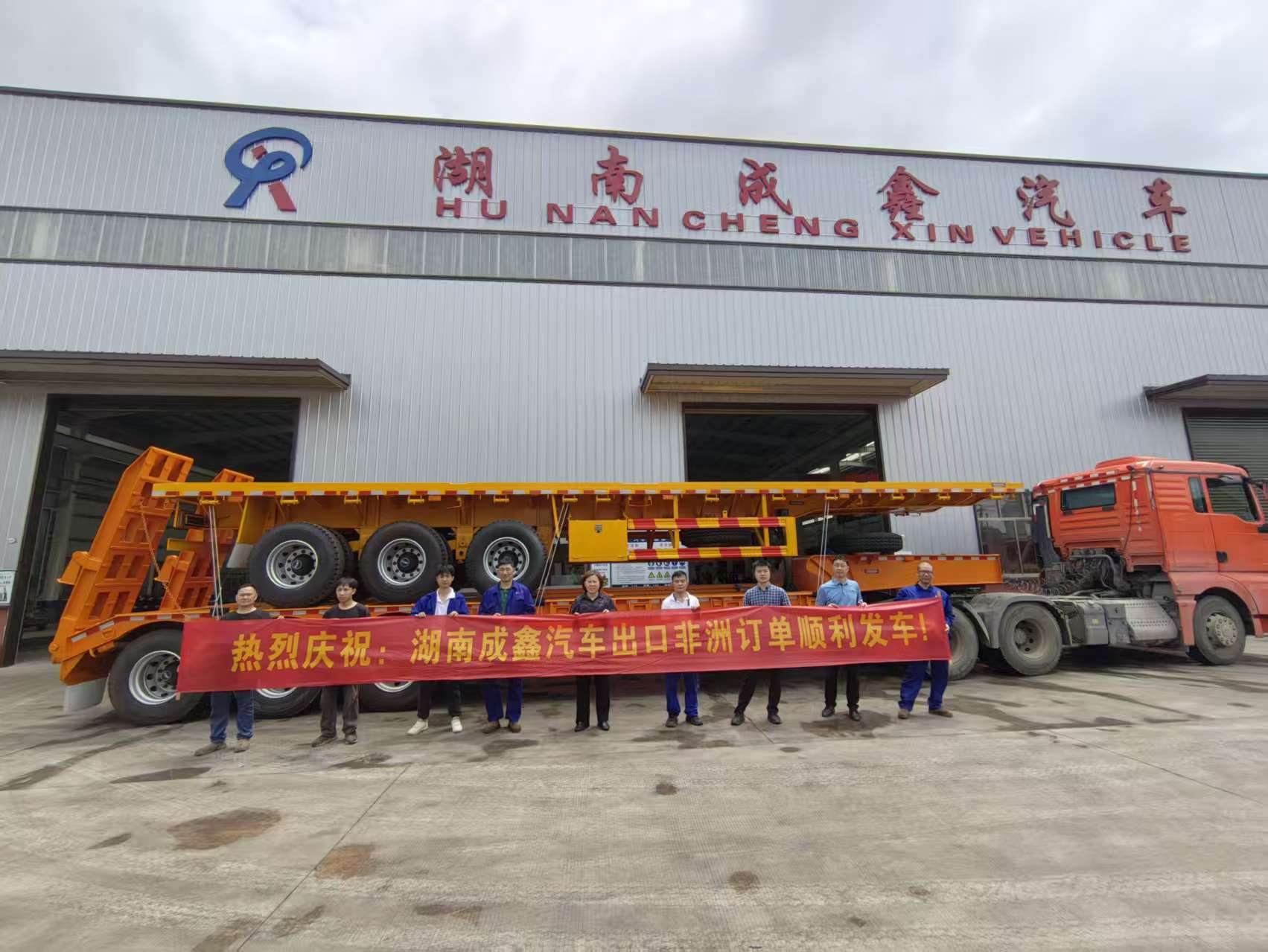
African transport, construction, mining, agriculture, and logistics companies need trailers that match their cargo, road conditions, operating environment, and local regulations. Selecting the right configuration is just as important as choosing a competitive price.
At Chengxin, our export approach focuses on product suitability, clear communication, manufacturing quality, and practical shipping arrangements.
A broad range of semi trailers
We supply flatbed container trailers, lowbed trailers, dump semi trailers, sidewall trailers, skeleton trailers, tanker trailers, and other customized transport solutions.
Customization for specific operating conditions
Customers can discuss axle configurations, suspension systems, tire sizes, load requirements, main beam specifications, and other technical details before production.

Quality control before shipment
We arrange product checks against the agreed specifications, including dimensions, visible weld quality, braking components, lighting, and paint finish, as applicable.

Export and logistics coordination
We coordinate shipment planning, export documents, and communication with logistics partners to help customers prepare for delivery and customs clearance.
Exporting a semi trailer from China involves several stages. The exact procedure depends on the destination country, the trailer model, the sales contract, and the selected shipping method.
Understand customer requirements
Cargo type, payload, tractor compatibility, destination and budget.
Recommend the right trailer
Select the trailer type, dimensions, axles, suspension and other components.
Confirm quotation and specifications
Agree on configuration, price, delivery terms, payment and production schedule.
Manufacture and inspect
Build the trailer and check it against the confirmed specifications.
Prepare export documents
Coordinate the commercial invoice, packing list and other applicable documents.
Arrange international shipping
Choose a suitable vessel, loading arrangement and destination port.
Support customs clearance and delivery
Provide shipment documents and coordinate with the buyer or appointed clearing agent.
Before preparing a quotation, we collect the information needed to recommend a suitable semi trailer.
Important questions include:
What cargo will the trailer carry?
What are the required payload and trailer dimensions?
Will the trailer transport 20-foot or 40-foot containers, construction machinery, bulk materials, or general cargo?
What tractor head will be used?
Which country and destination port will receive the shipment?
Are there local requirements for dimensions, axle loads, braking systems, lighting, or vehicle registration?
For example, a logistics company in Kenya may require a three-axle flatbed container trailer, while a mining contractor in Zambia may need a heavy-duty lowbed trailer for excavators and other machinery.
The more precise the initial requirements, the easier it is to select an appropriate configuration and avoid costly modifications later.
Different cargo applications require different trailer structures and equipment.

Flatbed Semi Trailer
Suitable for container transport, steel products, palletized cargo, and general logistics. Buyers should confirm container locking arrangements, deck dimensions, payload requirements, and axle configuration.

Lowbed Semi Trailer
Designed for transporting excavators, bulldozers, and other heavy machinery. Deck height, loading ramps, axle capacity, ground clearance, and route restrictions need careful consideration.

Dump Semi Trailer
Used for transporting materials such as sand, gravel, soil, and minerals. Buyers should consider body volume, payload, steel thickness, hydraulic lifting system, and unloading conditions.

Sidewall Cargo Semi Trailer
Suitable for bagged goods, agricultural products, building materials, and other general cargo. Sidewall height, floor structure, loading access, and lashing points can be customized.

Tanker and Specialized Semi Trailers
Fuel tankers, cement bulk trailers, and other specialized units require application-specific tank design, valves, safety equipment, and applicable regulatory checks.
Once the trailer type is selected, we prepare a detailed quotation and technical specification sheet.
The quotation should clearly identify the following information:
Item | Details to confirm |
|---|---|
Trailer type | Flatbed, lowbed, dump, sidewall, tanker, or another model |
Dimensions | Length, width, height, and deck height where applicable |
Payload | Required carrying capacity and applicable axle-load limits |
Axles | Number, rated capacity, manufacturer, and configuration |
Suspension | Mechanical or air suspension, subject to application and local rules |
Tires and rims | Size, quantity, load rating, and specification |
Braking system | Brake configuration, chambers, ABS or EBS where applicable |
Main structure | Steel grade, beam dimensions, floor and body thickness |
Commercial terms | Price, currency, Incoterms, payment, lead time, and warranty |
Shipping | Loading method, destination port, and freight responsibility |
Important: Payload, gross vehicle weight, and axle ratings are different measurements. A trailer advertised as a 60-ton or 70-ton model should not automatically be assumed to carry that payload under every road or regulatory condition. The final specification must be checked against the actual design and the destination country's requirements.
After the technical specifications and commercial terms are confirmed, production can proceed according to the agreed order.
Typical manufacturing and inspection activities include:
Material and component checks: Verify relevant materials and major components against the approved specification.
Chassis fabrication: Inspect dimensions, alignment, welding, and structural assembly.
Component installation: Check axles, suspension, tires, landing legs, kingpin, and braking components as applicable.
Electrical installation: Check lighting, wiring, connectors, and electrical functions.
Surface treatment: Inspect surface preparation, primer, and finish coating.
Final inspection: Review the completed trailer, record relevant checks, and address any identified defects before dispatch.

For overseas buyers, photographs and videos of the finished trailer can help confirm its visible condition and configuration before shipment. Where required, an independent inspection or third-party testing arrangement can be discussed in advance.
Shipping costs and delivery arrangements depend on the trailer's dimensions, weight, loading method, vessel availability, destination port, and inland transportation requirements.
Common options include RoRo, breakbulk, and flat-rack or other suitable cargo arrangements. Not every trailer can be shipped by every method.

Shipping method | How it works | Best suited for | Main consideration |
|---|---|---|---|
RoRo (Roll-on/Roll-off) | Cargo is driven or otherwise moved onto a suitable vessel deck | Trailers and vehicles accepted by the carrier in operable or approved loading condition | Carrier acceptance, dimensions, and loading arrangements |
Breakbulk | Cargo is handled as individual pieces rather than inside a standard container | Oversized or heavy trailers that cannot be containerized economically | Lifting equipment, securing, handling charges, and vessel schedules |
Flat rack or special container | Cargo is secured on an appropriate platform or specialized container | Units whose dimensions and weight fit the carrier's accepted limits | Maximum dimensions, weight, securing requirements, and availability |
The final method should be confirmed with the shipping line or freight forwarder based on the actual trailer drawings and measurements.
Depending on the destination and available shipping services, buyers may consider ports such as:

Mombasa, Kenya
An important gateway for Kenya and inland markets served by East African transport corridors.

Dar es Salaam, Tanzania
A major port serving Tanzania and cargo routes to several neighboring inland countries.

Durban, South Africa
A significant maritime gateway for Southern African trade and certain inland transit routes.

Tema, Ghana
An important port serving Ghana and cargo distribution in parts of West Africa.
These are examples, not a guaranteed list of available direct services. The best port depends on the buyer's country, shipping schedule, total landed cost, customs arrangements, and final delivery location.
For landlocked countries such as Zambia, Botswana, and Zimbabwe, cargo may need to transit through a seaport in another country. Transit documentation, border procedures, and inland freight should be confirmed before the shipment is booked.
Correct documentation is essential for export clearance, shipment tracking, and import customs procedures. The exact documents depend on the destination country, the product, the shipping method, and the agreed trade terms.
The following table lists common documents that may be required.
Document | Purpose |
|---|---|
Commercial Invoice | States the transaction value, seller, buyer, product description, and other commercial details |
Packing List | Describes the shipment contents, quantities, dimensions, and weights as applicable |
Bill of Lading (B/L) | Serves as a shipping document and evidence of the contract of carriage |
Certificate of Origin | Identifies the country of origin where required |
Export Customs Declaration | Records the export transaction for customs purposes |
Technical Specification Sheet | Helps identify the trailer configuration and technical characteristics |
Inspection Certificate | Required when applicable under the destination country's rules or the sales contract |
Import Permit or Conformity Documents | Required when applicable to the product and destination market |
Advance Cargo Declaration | Required for certain destinations and shipment categories |
These documents are not universally mandatory in every shipment. The buyer and exporter should confirm the specific requirements before cargo dispatch.
For example, Kenya's Revenue Authority provides an official process for advance cargo declarations, including supporting shipping documents for applicable shipments. Tanzania's trade portal also outlines customs, inspection, and port-clearance steps.
Our export coordination process typically includes:
Confirming the consignee and notify-party details.
Checking that product descriptions and shipment details match the confirmed order.
Coordinating the commercial invoice and packing list.
Working with the freight forwarder on shipping instructions and bill of lading details.
Preparing additional product or origin documentation when required and available.
Communicating with the buyer about documents needed for destination customs clearance.
Important: Buyers should appoint a local customs broker or clearing agent to verify import permits, inspection requirements, duties, VAT, and registration procedures before the goods are shipped.
Africa is not a single customs jurisdiction. Import procedures, technical requirements, taxes, and vehicle registration rules vary between countries.
Here are examples of where buyers should verify the applicable requirements.

Kenya
Confirm applicable advance cargo declaration requirements, customs documentation, product classification, and any relevant standards or conformity procedures before shipment.

Tanzania
Check customs declarations, applicable Tanzania Bureau of Standards procedures, inspection requirements, and port-clearance steps for the specific trailer.

South Africa
Verify importer registration, customs declarations, tariff classification, and any applicable import permits. South African authorities note that certain categories of goods, including used goods, are subject to additional import controls.

Zambia and Other Landlocked Markets
Confirm the transit route, border procedures, inland freight costs, and local import requirements. A quotation to a seaport is not the same as a quotation for delivery to the buyer's final destination.
Before placing an order, buyers should also confirm the applicable requirements for trailer dimensions, axle loads, braking systems, lighting, vehicle inspection, and registration. A supplier's ISO 9001 certification or a general product certificate does not automatically mean that a trailer meets every country's road-approval requirements.
The total cost of importing a semi trailer is more than the factory price. Buyers should compare the complete landed cost to make a more informed purchasing decision.
The main cost components include:
Cost component | What affects the cost? |
|---|---|
Trailer purchase price | Model, payload, dimensions, steel specification, components, and customization |
Inland transport in China | Factory location, loading arrangements, and distance to the export port |
Export handling | Port charges, documentation, and other applicable export expenses |
Ocean freight | Destination, cargo dimensions, shipping method, vessel availability, and market conditions |
Marine insurance | Insured value, coverage, cargo type, and policy terms |
Import duty and taxes | Destination tariff classification, customs value, and applicable tax rules |
Customs clearance | Broker fees, inspection, documentation, and other local charges |
Inland delivery | Distance from the arrival port to the buyer's warehouse, factory, or project site |
A useful budgeting formula is:
Estimated landed cost = Trailer price + export and shipping costs + insurance + import duties and taxes + destination handling + customs clearance + inland delivery.
This is a planning formula rather than a universal customs valuation formula. The actual tax base and charges depend on local law and the agreed delivery terms.
Item | FOB | CIF |
|---|---|---|
Main freight | Usually arranged and paid by the buyer | Arranged and paid by the seller to the named destination port |
Marine insurance | Usually arranged by the buyer | Seller must procure the insurance required under CIF |
Risk transfer | Normally when goods are loaded on board at the shipment port | Also normally when goods are loaded on board at the shipment port |
Destination import clearance | Buyer | Buyer |
Destination duties and taxes | Buyer | Buyer |
Under the Incoterms® 2020 rules, CIF is intended for sea and inland waterway transport. Although the seller pays freight and arranges insurance to the named destination port, the risk transfers to the buyer when the goods are loaded on board at the port of shipment. Always state the named port and the agreed Incoterms rule and version in the contract.
For an accurate quotation, buyers should provide the trailer model, quantity, destination country, preferred port, and required specifications.
The overall lead time includes more than manufacturing. It also includes specification confirmation, production, inspection, export formalities, vessel scheduling, ocean transit, and destination clearance.
Stage | Main factors affecting duration |
|---|---|
Requirement confirmation | Complexity of the design and speed of technical approval |
Production | Order quantity, customization, component availability, and factory schedule |
Inspection | Inspection scope, corrective work, and third-party availability |
Export preparation | Document accuracy and customs procedures |
Ocean shipping | Vessel schedule, transshipment, route, and port congestion |
Import clearance | Local regulations, document completeness, inspections, and payment of applicable charges |
Inland delivery | Distance, transit permits, border procedures, and road conditions |
We recommend requesting a production schedule and estimated shipping plan with the quotation. A reliable delivery estimate should be based on the actual order and shipping route rather than a generic promise.
African importers can reduce unnecessary costs and delays by addressing common issues before production.
Challenge 1: Choosing the wrong trailer configuration
Solution: Confirm the actual cargo, payload, tractor specifications, road conditions, and local axle-load limits before ordering.
Challenge 2: Unexpected import or compliance requirements
Solution: Ask a local clearing agent to confirm the current requirements for the exact product and destination before shipment.
Challenge 3: Underestimating the total cost
Solution: Compare complete landed-cost estimates, not just factory prices or ocean freight.
Challenge 4: Inconsistent technical specifications
Solution: Approve a written specification sheet before production and check the finished trailer against it.
Challenge 5: Difficult maintenance after delivery
Solution: Discuss commonly available replacement parts, maintenance instructions, warranty terms, and after-sales communication before placing the order.
Choosing an export supplier involves more than comparing prices. Buyers should consider technical communication, product consistency, customization capabilities, export coordination, and support after delivery.
Hunan Chengxin Special Vehicle Co., Ltd. focuses on semi trailers and special-purpose transport equipment for commercial applications. Our approach is to understand each customer's requirements and develop a configuration suited to the intended operation.
We can discuss:
Flatbed and container semi trailers for logistics and freight transportation.
Lowbed semi trailers for construction and mining equipment.
Dump semi trailers for sand, gravel, and bulk-material transportation.
Sidewall and cargo semi trailers for general freight.
Tanker and other specialized trailers for specific transport applications.
Customized configurations based on technical requirements and destination-market considerations.
For each project, buyers should request the relevant product specifications, component details, inspection arrangements, warranty terms, and export quotation before confirming an order.
We can discuss export arrangements for African markets based on the destination, product configuration, applicable regulations, and shipping availability. Buyers should identify their destination country and port so that the shipping and documentation requirements can be checked.
There is no single best configuration for every African country. The right choice depends on the road surface, terrain, cargo weight, axle-load limits, operating distance, and maintenance resources. Mechanical suspension may be appropriate for some applications, while air suspension may be preferred for others.
Provide the trailer type, quantity, payload, dimensions, axle configuration, tire size, suspension preference, tractor specifications, destination country, and preferred delivery port. A reference photo or technical drawing can also help.
Customization may be possible for dimensions, axles, suspension, tires, steel specifications, sidewalls, ramps, braking components, and other features, subject to engineering feasibility and applicable regulations.
Common documents include a commercial invoice, packing list, bill of lading, and export or origin documents as applicable. Additional permits, conformity documents, or inspections may be required depending on the destination country and product.
Compare suitable shipping methods, confirm accurate cargo dimensions early, evaluate alternative ports where practical, and calculate inland transportation costs. The lowest ocean freight rate does not necessarily produce the lowest overall landed cost.
Shipping arrangements may be possible through a suitable seaport followed by inland transport. The final route, transit procedures, freight costs, and border requirements must be confirmed for the destination.
Ask for the approved technical specification, production photographs, inspection records, and a final inspection video where available. An independent third-party inspection can also be arranged if agreed in advance.
Are you looking for a reliable semi trailer supplier in China for your transport, construction, or mining business in Africa?
Contact Chengxin with your requirements. We can discuss the appropriate trailer model, technical configuration, quotation, and shipping options for your destination.
Share a few details to help us understand your project.
To improve the article's relevance and user experience, use authentic product and factory photographs wherever possible.
Image placement | Recommended image | Suggested alt text |
|---|---|---|
Featured image | Semi trailers ready for export |
|
Product selection | Flatbed trailer at a logistics terminal |
|
Product selection | Lowbed carrying an excavator |
|
Manufacturing section | Chassis welding and assembly |
|
Quality control | Finished trailer inspection |
|
Shipping section | Trailer loading onto a cargo vessel |
|
For each image, use a descriptive file name, write concise and accurate alt text, compress the image without excessive quality loss, and ensure that the image reflects the actual product. Avoid adding specifications or certification claims to images unless they can be verified.
Recommended internal links
Link this article to relevant product and supporting pages on the Chengxin website:
Flatbed Semi Trailer
Lowbed Semi Trailer
Dump Semi Trailer
Sidewall Cargo Semi Trailer
Semi Trailer Manufacturing Process
Semi Trailer Price Guide
How to Choose a Semi Trailer for African Roads
Use descriptive anchor text that matches the destination page instead of repeating the same keyword in every link.
Final SEO recommendation: Publish this article as an educational export-process guide and support it with product-specific pages, real factory photographs, and clear quotation contact details. This will help potential buyers understand not only what Chengxin supplies, but also how the company approaches the practical steps involved in exporting semi trailers to Africa.


