
Views: 0 Author: Site Editor Publish Time: 2026-08-25 Origin: Site


Learn how to choose the right lowbed trailer for heavy equipment transportation. This complete guide explains lowbed trailer types, capacity, axle configuration, dimensions, suspension, materials, and key buying factors for construction, mining, and industrial applications.
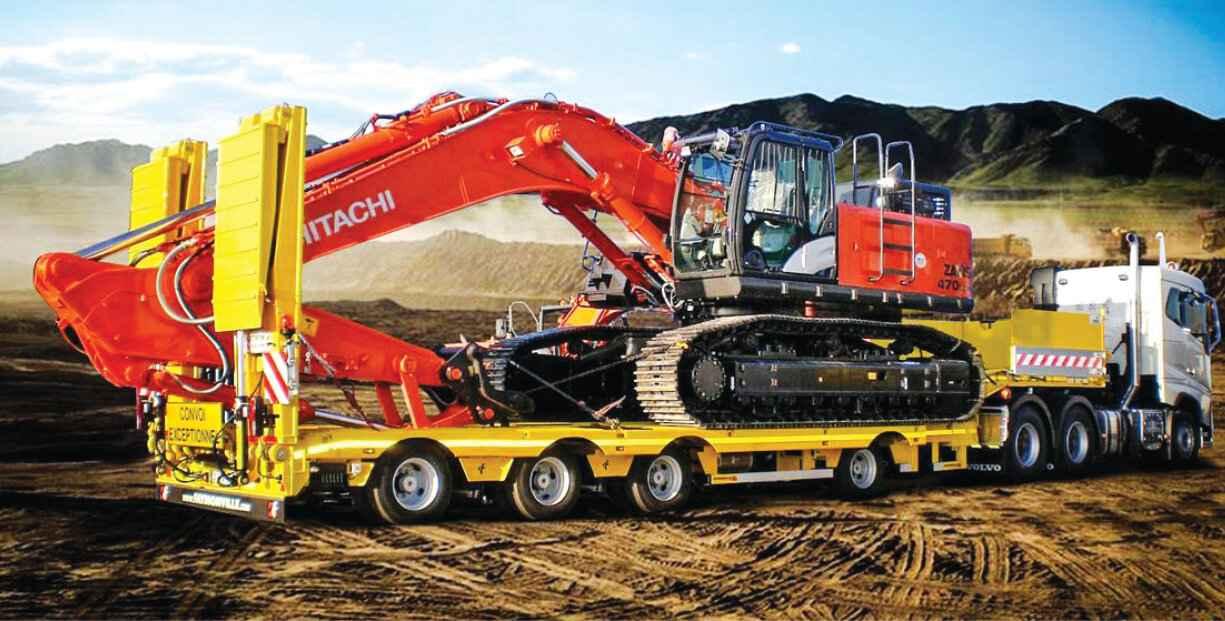
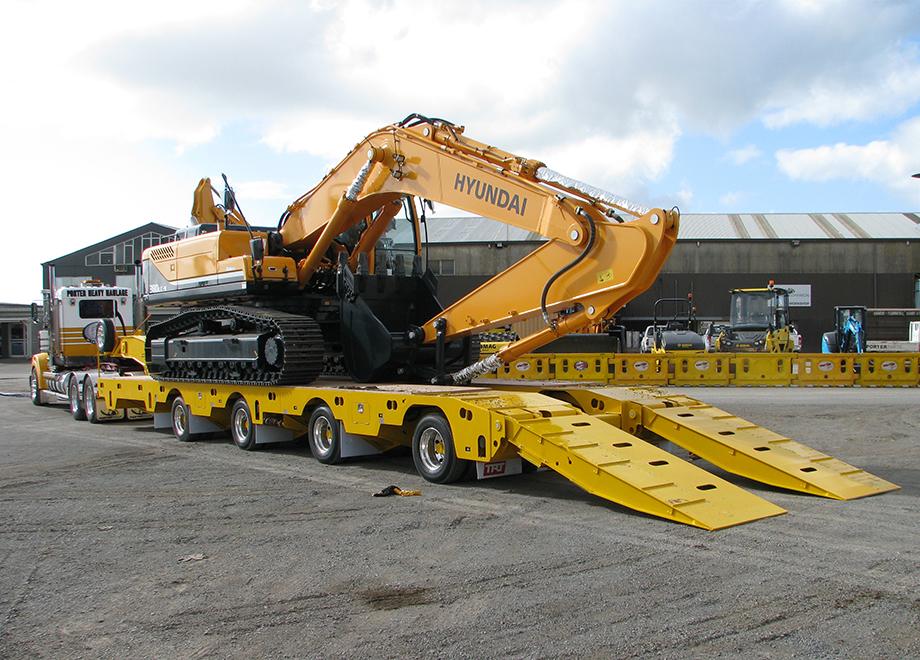
Choosing the right lowbed trailer is a critical decision for companies involved in construction, mining, infrastructure projects, agriculture, and heavy equipment transportation.
A lowbed semi trailer is designed specifically for transporting oversized, overweight, and high-height cargo, including excavators, bulldozers, cranes, loaders, mining machinery, and industrial equipment.
However, selecting a suitable lowbed trailer is not simply about choosing the largest loading capacity. The correct trailer configuration depends on multiple factors:
Cargo weight
Equipment dimensions
Transportation distance
Road conditions
Axle regulations
Loading method
Tractor specifications
Operating environment
A properly selected lowbed trailer can improve transportation efficiency, reduce maintenance costs, and ensure safer heavy equipment movement.
A lowbed trailer, also called a low loader trailer or lowboy trailer, is a specialized semi-trailer with a lower loading platform compared with standard flatbed trailers.
Its main purpose is to transport tall and heavy equipment while reducing the overall transport height.
The basic structure includes:
| Component | Function |
|---|---|
| Gooseneck | Connects trailer with tractor fifth wheel |
| Main Deck | Low platform for carrying equipment |
| Rear Axle Assembly | Supports cargo weight |
| Ramps | Allows machinery loading |
| Suspension System | Absorbs road impact |
| Kingpin | Connects trailer to tractor |
The low deck design helps lower the center of gravity, improving transport stability when carrying heavy machinery.
The most important rule when buying a lowbed trailer:
Before contacting a manufacturer, prepare the following information:
| Required Information | Why It Matters |
|---|---|
| Equipment Type | Determines trailer structure |
| Machine Weight | Determines axle capacity |
| Overall Length | Determines deck length |
| Overall Width | Determines platform width |
| Overall Height | Determines deck height requirement |
| Track/Wheel Distance | Determines loading compatibility |
| Center of Gravity | Determines load balance |
| Working Environment | Determines trailer strength |
For example:
A 20-ton excavator does not need the same trailer as a 70-ton mining machine.
A highway transport trailer may require different specifications from a mining-site trailer.
One of the biggest mistakes buyers make is selecting a trailer only based on maximum capacity.
A trailer that is too small may cause:
❌ Frame deformation
❌ Axle overload
❌ Safety risks
❌ Faster component wear
A trailer that is too large may cause:
❌ Higher purchase cost
❌ Increased fuel consumption
❌ Reduced efficiency
| Lowbed Type | Axle Configuration | Typical Application |
|---|---|---|
| 30–40 Ton Lowbed | 2–3 Axles | Small excavators, loaders |
| 40–60 Ton Lowbed | 3 Axles | Construction machinery |
| 60–80 Ton Lowbed | 4 Axles | Mining equipment |
| 80–100+ Ton Lowbed | Multi Axle | Heavy industrial transport |
Actual payload depends on trailer design, axle rating, tractor capacity, cargo distribution, and local regulations.
Axle selection directly affects:
Load distribution
Road pressure
Stability
Legal compliance
| Axles | Capacity Range | Suitable Cargo |
|---|---|---|
| 2 Axle | 30–40 Tons | Medium equipment |
| 3 Axle | 40–60 Tons | Excavators, bulldozers |
| 4 Axle | 60–80 Tons | Mining machinery |
| 5+ Axle | 80 Tons+ | Oversized industrial equipment |
A 3-axle lowbed trailer is one of the most common configurations for construction equipment transportation, while multi-axle trailers are often used for heavier industrial loads.
Different applications require different lowbed designs.
✔ Simple structure
✔ Lower cost
✔ Easy maintenance
Suitable for:
Standard construction machinery
Regular transportation
✔ Easier loading
✔ Suitable for non-running equipment
✔ Faster operation
Suitable for:
Mining equipment
Heavy industrial machines
Large excavators
✔ Adjustable loading length
✔ Suitable for oversized cargo
Suitable for:
Long steel structures
Wind turbine components
Large pipes
Dimensions are one of the most important factors.
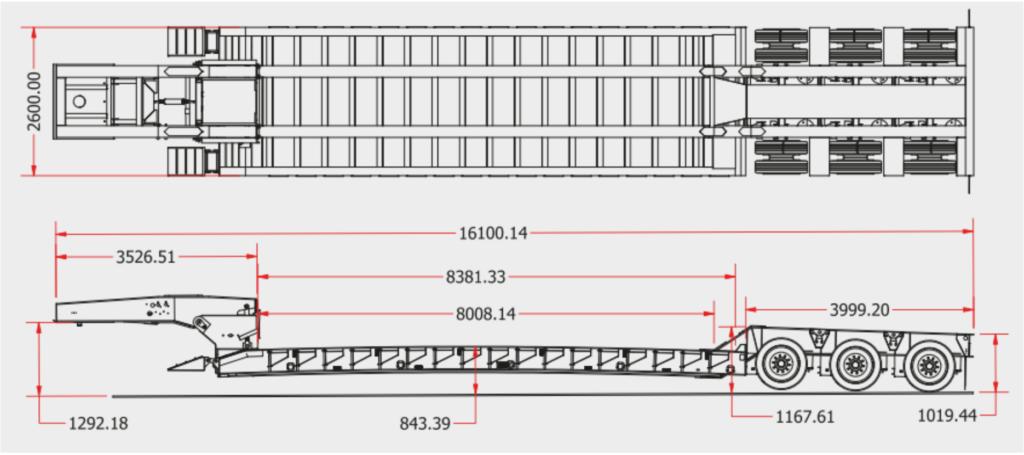
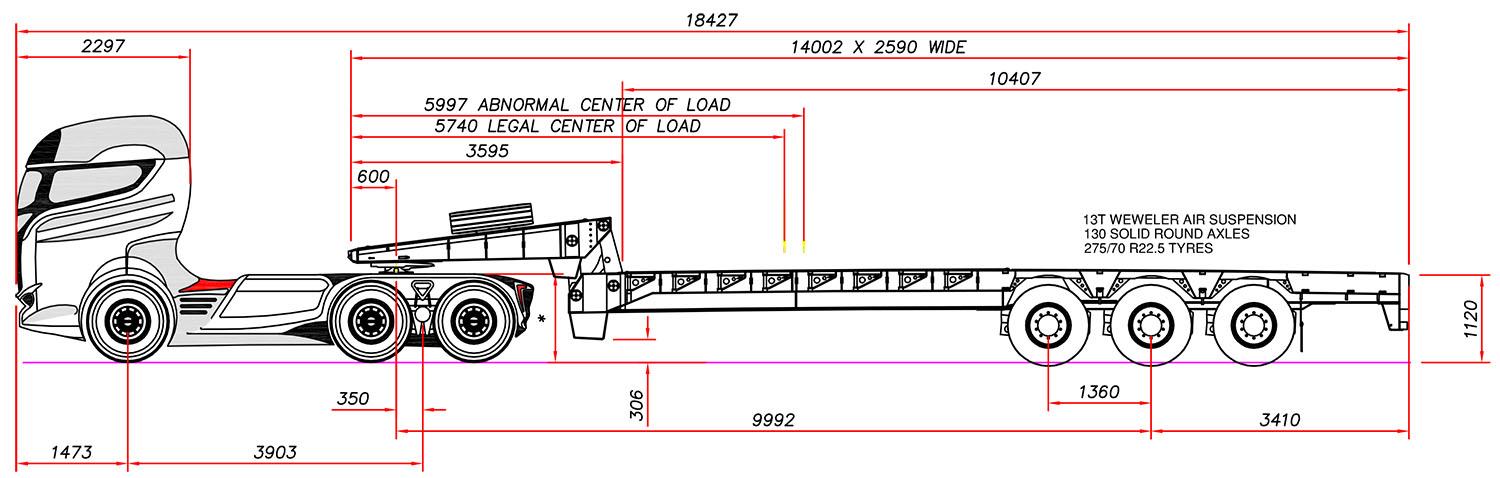
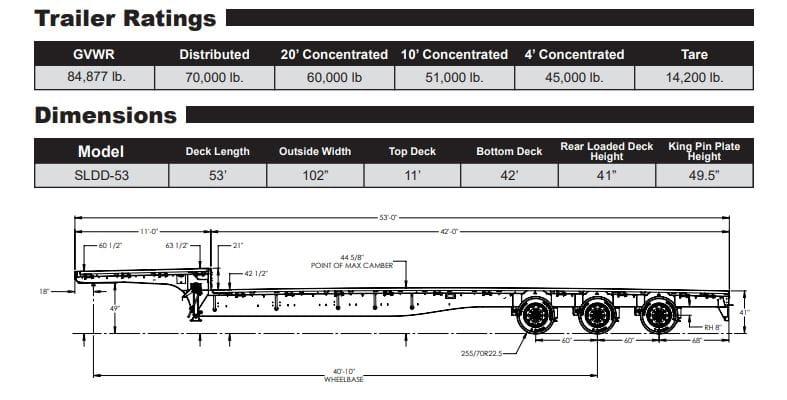
| Parameter | Common Range |
|---|---|
| Length | 10–16 m |
| Width | 2.5–3.2 m |
| Deck Height | 0.5–1.2 m |
| Loading Platform Length | 6–12 m |
| Capacity | 30–100+ Tons |
The correct dimensions depend on:
Equipment size
Country regulations
Transport route
Loading method
Buyers should request a complete technical drawing before production.
Suspension affects trailer durability, maintenance, and driving stability.
| Advantages | Disadvantages |
|---|---|
| Strong structure | Less driving comfort |
| Easy maintenance | Higher vibration |
| Suitable for rough roads | More mechanical wear |
Recommended for:
Africa
Mining areas
Construction sites
| Advantages | Disadvantages |
|---|---|
| Better stability | Higher cost |
| Lower vibration | More components |
| Better cargo protection | Requires maintenance |
Recommended for:
Highway transportation
High-value equipment
For heavy equipment transportation, trailer frame strength is essential.
High-quality lowbed trailers usually use:
Q345B high-strength steel
Reinforced main beams
Heavy-duty cross members
Strong welding structure
| Part | Check Point |
|---|---|
| Main Beam | Thickness and steel grade |
| Cross Beam | Spacing and reinforcement |
| Welding | Welding quality |
| Suspension Mount | Strength |
| Kingpin Area | Reinforcement |
| Ramp Structure | Load capacity |
The best lowbed trailer for one country may not be suitable for another.
| Environment | Recommended Features |
|---|---|
| Highway | Air suspension, lighter design |
| Mining Road | Reinforced frame, mechanical suspension |
| Africa Rural Road | Strong structure, easy maintenance |
| Construction Site | High ground clearance |
| Long Distance Transport | Durable components |
For African markets especially, buyers often prioritize:
✔ Heavy-duty structure
✔ Easy repair
✔ Reliable suspension
✔ Spare parts availability
A lowbed trailer must work together with the tractor unit.
Check:
| Item | Requirement |
|---|---|
| Tractor Horsepower | Match trailer load |
| Fifth Wheel Height | Match kingpin position |
| Air Supply | Compatible brake system |
| Traction Capacity | Suitable for cargo weight |
For example:
A 100-ton lowbed trailer requires a significantly stronger tractor than a 40-ton trailer.
Before placing an order, confirm:
| Item | Confirm |
|---|---|
| Cargo Weight | ✓ |
| Cargo Dimensions | ✓ |
| Axle Number | ✓ |
| Trailer Length | ✓ |
| Deck Height | ✓ |
| Suspension Type | ✓ |
| Ramp Design | ✓ |
| Brake System | ✓ |
| Tire Specification | ✓ |
| Steel Material | ✓ |
| Manufacturer Experience | ✓ |
The cheapest trailer may use:
Lower-quality steel
Weak structure
Poor hydraulic components
This can increase long-term operating costs.
Different countries have different:
Weight limits
Width restrictions
Axle regulations
Always confirm local requirements before production.
A trailer designed for 40 tons should not regularly carry 70 tons.
Overloading causes:
Cracks
Tire failure
Suspension damage
Reduced service life
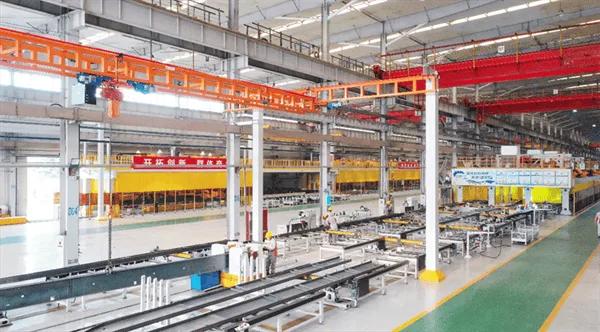
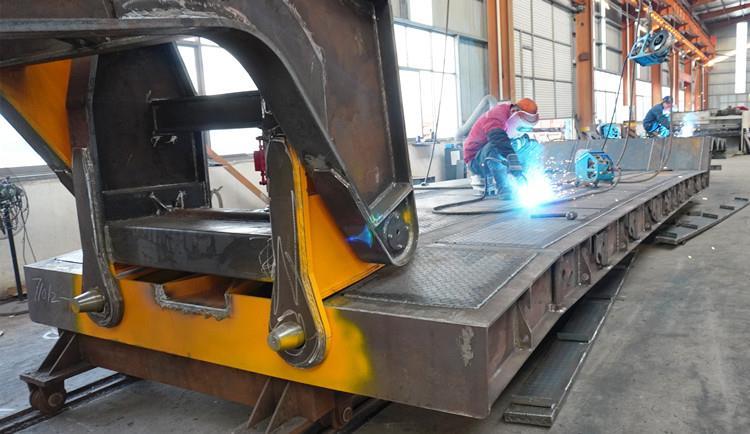
Hunan Chengxin Special Vehicle Co., Ltd is a professional semi trailer manufacturer providing customized transportation solutions for global customers.
The company specializes in:
Lowbed Semi Trailer
Flatbed Semi Trailer
Sidewall Semi Trailer
Dump Semi Trailer
Container Trailer
Tank Semi Trailer
✔ OEM customization
✔ Different axle configurations
✔ Heavy-duty structural design
✔ Mechanical and air suspension options
✔ Export experience
✔ Customized technical drawings
Customers can customize:
Trailer length
Width
Capacity
Axles
Suspension
Paint color
Logo
Choosing the right lowbed trailer requires more than selecting a high-capacity model.
The ideal trailer should match:
Cargo weight + Equipment dimensions + Road conditions + Tractor capability + Local regulations
For construction, mining, and heavy equipment transportation, selecting the correct lowbed configuration can improve safety, reduce maintenance costs, and increase operational efficiency.
A professional manufacturer such as Hunan Chengxin Special Vehicle Co., Ltd can provide customized lowbed trailer solutions according to different transportation requirements.
Email: luna@hncx168.com
What's app: +86 13787356058


