
Views: 0 Author: Site Editor Publish Time: 2026-08-11 Origin: Site


What is a flatbed semi trailer? Learn about flatbed trailer types, dimensions, load capacity, applications, key features, advantages, and buying tips for container, machinery, steel, and general cargo transport.
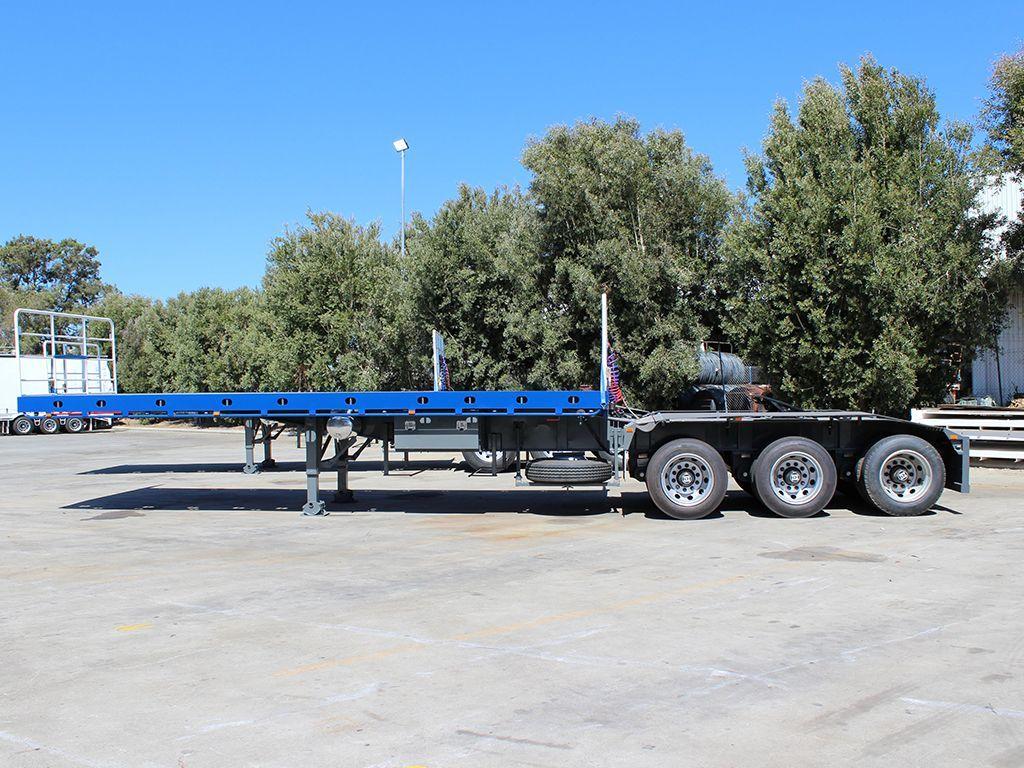
A flatbed semi trailer is an open-deck trailer designed to transport a wide variety of cargo that does not require a fully enclosed trailer body. Unlike box or van trailers, a flatbed semi trailer has an open platform without a fixed roof or enclosed sidewalls.
This design provides excellent flexibility for loading and unloading cargo from the rear, sides, or top.
Flatbed semi trailers are widely used for:
Container transportation
Steel products
Construction materials
Heavy machinery
Industrial equipment
Timber
Agricultural machinery
Oversized cargo
Because of their simple and versatile structure, flatbed trailers are one of the most widely used trailer types in commercial road transportation.
A flatbed semi trailer is connected to a tractor truck through a kingpin and fifth wheel. The tractor provides the engine power and braking control, while the trailer carries the cargo.
The basic structure normally includes:
Main frame
Loading platform
Main beams
Cross members
Axles
Suspension system
Wheels and tires
Air brake system
Landing gear
Kingpin
Rear protection
Container twist locks, when required
The open platform allows cargo to be loaded using forklifts, cranes, ramps, or other lifting equipment.
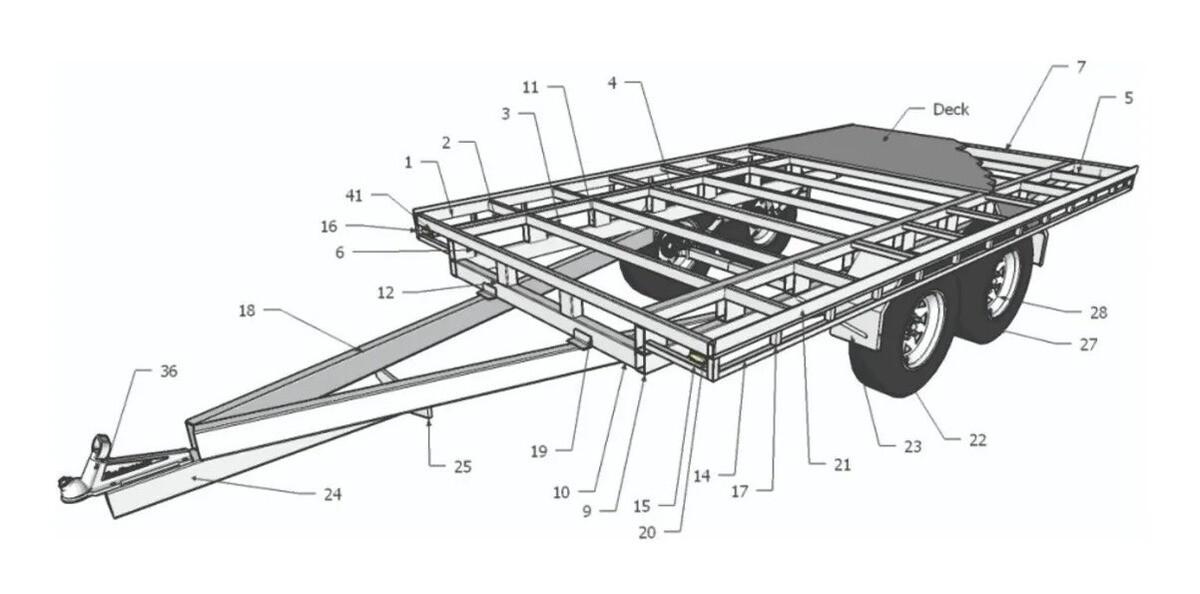
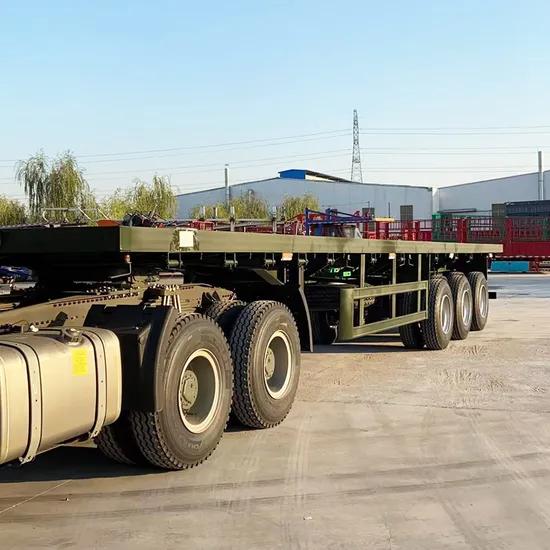
| Component | Function |
|---|---|
| Main Beam | Supports the main structural load |
| Cross Members | Reinforce the trailer frame |
| Deck | Provides the cargo loading surface |
| Axles | Transfer load to the road |
| Suspension | Absorbs road shocks and distributes load |
| Kingpin | Connects trailer to tractor |
| Landing Gear | Supports the trailer when disconnected |
| Brake System | Provides trailer braking |
| Twist Locks | Secure ISO containers |
| Rear Protection | Helps improve road safety |
A properly engineered frame is essential for maintaining structural strength under repeated heavy loading.
Not every flatbed trailer is identical. Manufacturers can modify the platform, axle configuration, length, and accessories according to cargo requirements.
The standard flatbed trailer consists of an open platform and is designed for general cargo transportation.
Typical applications include:
Steel products
Machinery
Construction materials
Timber
Industrial equipment
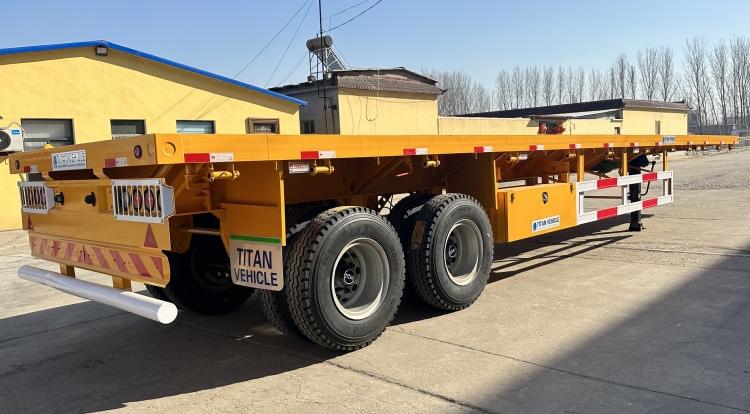
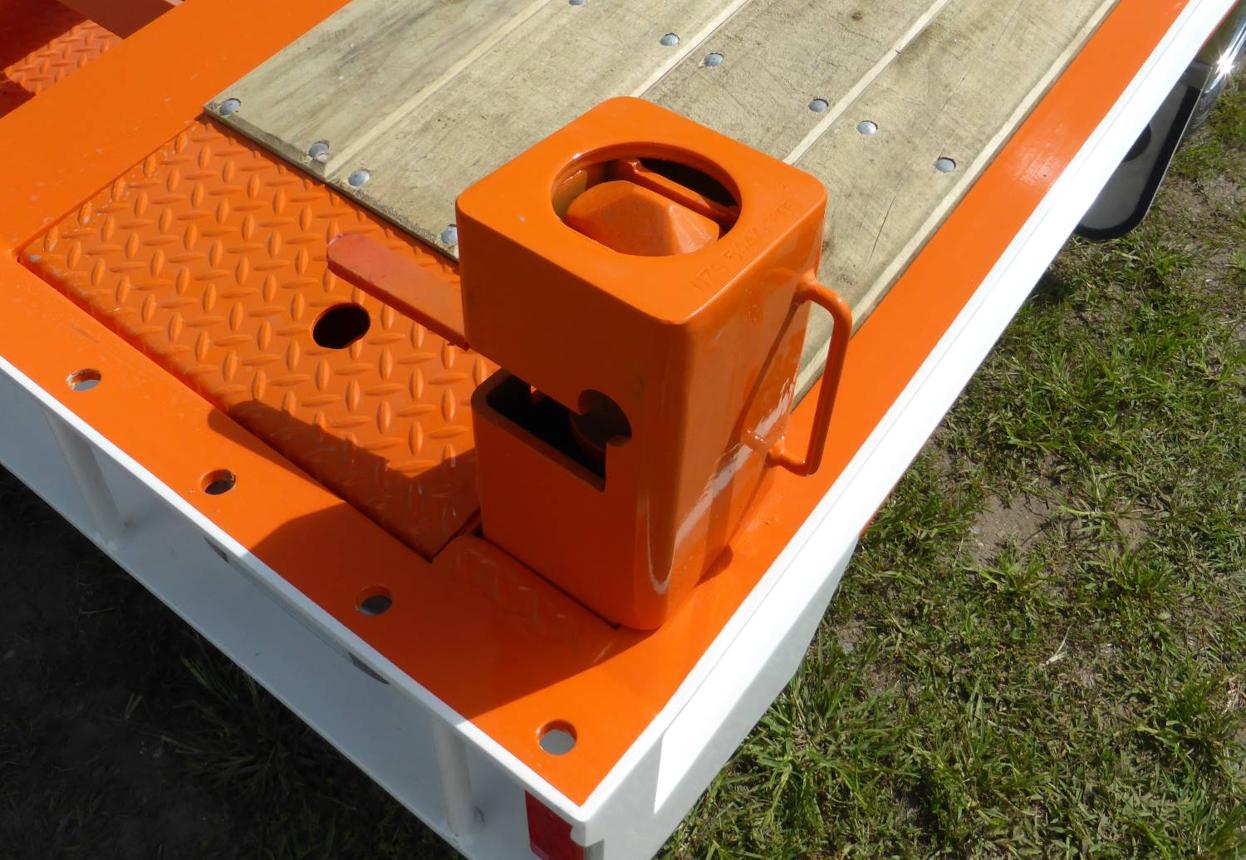
Container flatbed trailers are designed to transport ISO shipping containers.
Common configurations include:
20-foot containers
40-foot containers
45-foot containers
Twist locks can be installed to securely connect the container to the trailer.
For container logistics, buyers should confirm the trailer's dimensions, twist-lock positions, axle configuration, and local weight regulations before purchasing.
Heavy-duty flatbed trailers are designed for cargo with higher weight requirements.
Typical applications include:
Heavy machinery
Steel products
Construction equipment
Mining equipment
Industrial components
These trailers may use reinforced beams, additional cross members, more axles, and upgraded suspension systems.
An extendable flatbed trailer allows the deck length to be increased when transporting long cargo.
Typical applications include:
Steel beams
Wind power components
Long pipes
Bridge components
Oversized industrial structures
The exact extension length and legal payload must be determined according to the cargo and local road regulations.
There is no single universal flatbed trailer specification. Dimensions and capacity vary according to the manufacturer's design, axle configuration, cargo requirements, and regulations in the destination country.
The following are typical commercial configurations, rather than universal legal limits.
| Specification | Typical Range |
|---|---|
| Trailer Length | 12–18 m |
| Trailer Width | Around 2.5–3.0 m |
| Axles | 2–5+ |
| Typical Payload | 30–100+ tons |
| Suspension | Mechanical / Air |
| Deck Type | Steel plate / checker plate / customized |
| Container Compatibility | 20 ft / 40 ft / 45 ft |
| Main Beam | High-strength structural steel |
Important: Actual permissible payload is not determined by the trailer alone. It depends on axle ratings, trailer GVWR, tractor capacity, road regulations, axle-load limits, and the cargo distribution.
Load capacity is one of the most important factors when selecting a flatbed semi trailer.
A common mistake is to choose a trailer solely based on the advertised payload without checking local axle-load regulations.
| Configuration | Typical Payload Range* | Common Application |
|---|---|---|
| 2 Axles | 30–40 tons | General cargo |
| 3 Axles | 40–60 tons | Containers and machinery |
| 4 Axles | 60–80 tons | Heavy equipment |
| 5+ Axles | 80–100+ tons | Project and oversized cargo |
*Typical manufacturer configurations for reference only. Actual legal payload varies by country and road regulations.
The actual carrying capacity depends on:
Axle capacity
Number of axles
Trailer tare weight
Frame strength
Suspension rating
Tire load rating
Kingpin rating
Tractor capacity
Local gross vehicle weight limits
Local axle-load regulations
Trailer dimensions should always be selected according to the cargo and destination market.
Common lengths include approximately:
12 m
13 m
13.5 m
15 m
16 m
17 m
18 m
Custom lengths can be manufactured for specific transportation applications.
A common trailer width is approximately 2.5 m, while wider configurations may be available where regulations permit.
Flatbed trailers generally have a relatively low loading platform compared with conventional cargo bodies, making them suitable for large cargo.
However, deck height varies significantly according to:
Tire size
Axle design
Suspension
Frame construction
Cargo requirements
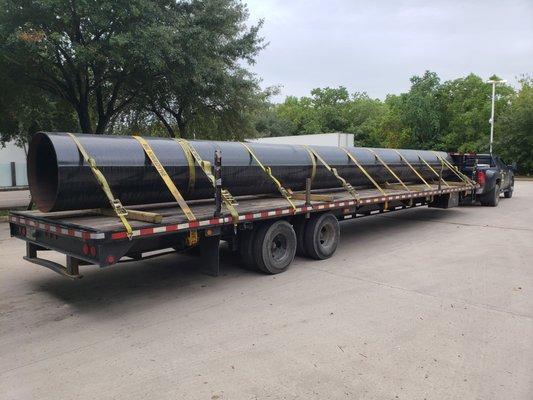
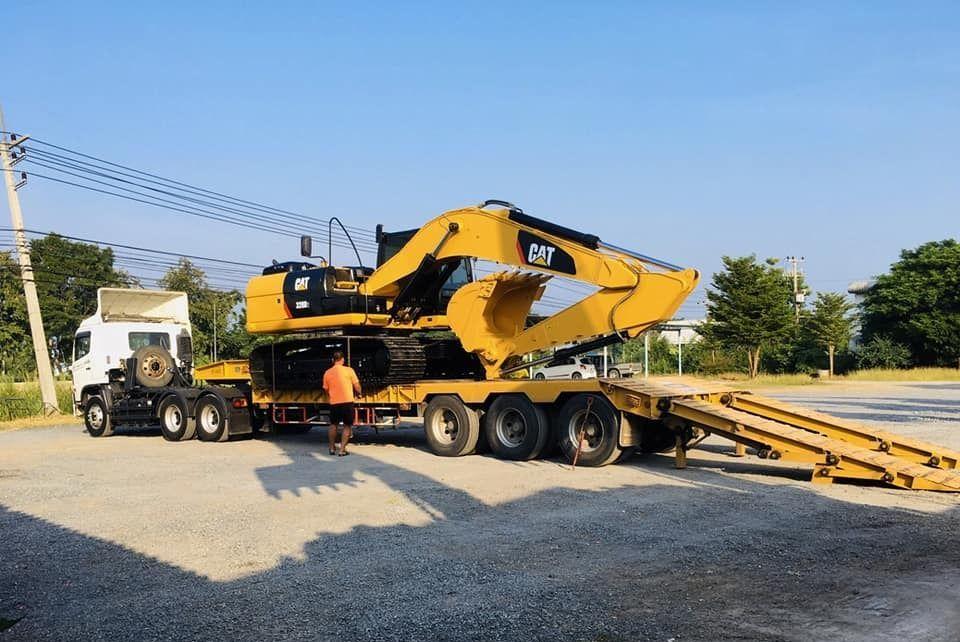
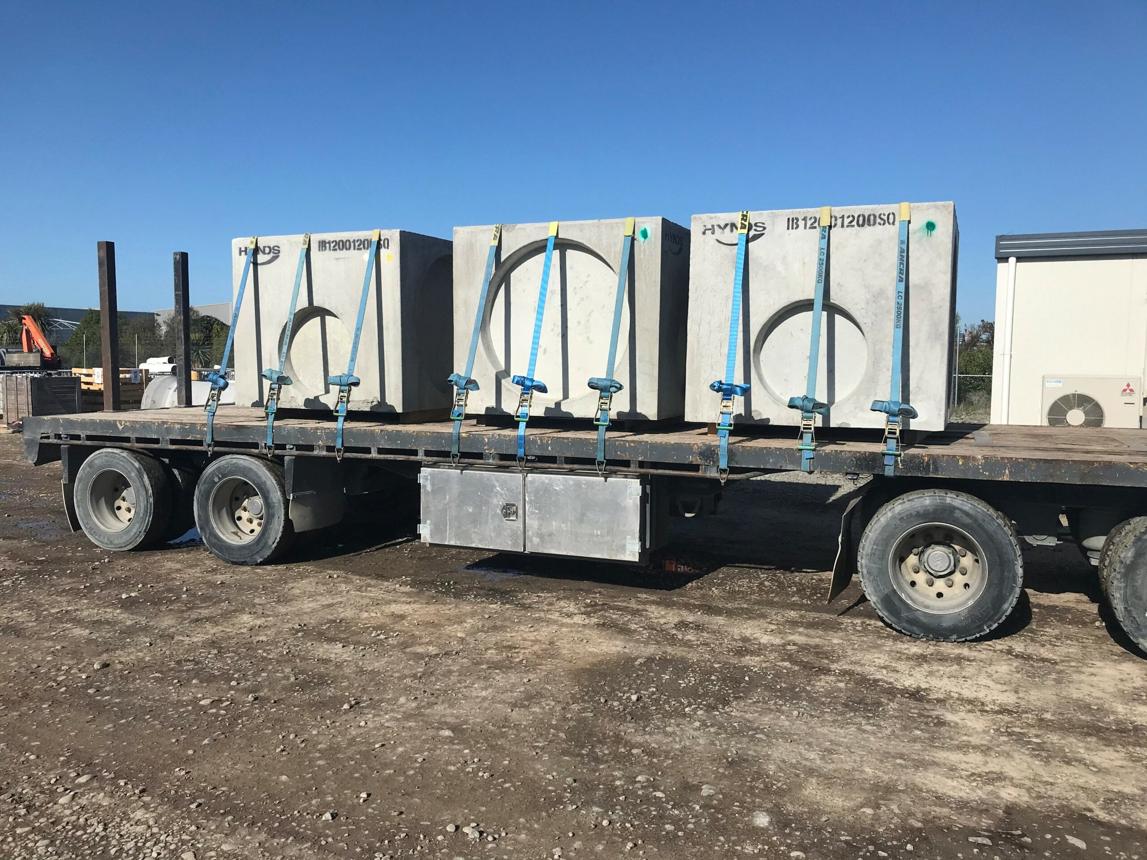
Flatbed semi trailers are used in many industries because of their flexible open-deck design.
Flatbed trailers equipped with suitable twist locks can transport standard ISO containers.
They are commonly used in:
Port logistics
Intermodal transportation
International freight
Container distribution
Flatbed trailers can transport:
Excavators
Loaders
Steel beams
Concrete products
Construction materials
For very heavy construction equipment, however, a lowbed semi trailer may be more suitable because its lower deck can reduce overall transport height.
Flatbed trailers are widely used to transport:
Steel pipes
Steel plates
Structural steel
Steel beams
Fabricated metal products
Cargo must be properly secured using suitable chains, straps, blocking, or other approved load-securing equipment.
Flatbed trailers can transport:
Tractors
Harvesters
Agricultural implements
Farm machinery
Buyers often compare these two trailer types when transporting machinery.
| Feature | Flatbed Semi Trailer | Lowbed Semi Trailer |
|---|---|---|
| Deck | Open flat platform | Lower deck |
| Loading Flexibility | Excellent | Excellent |
| Container Transport | Excellent with suitable equipment | Limited |
| Heavy Machinery | Good | Excellent |
| Oversized Equipment | Good | Excellent |
| Overall Cargo Height | Higher | Lower |
| Typical Application | General cargo & containers | Heavy machinery |
Choose a flatbed semi trailer when you need:
Flexible cargo transportation
Container transportation
Steel and construction material transport
Easy crane/forklift loading
Choose a lowbed semi trailer when you primarily transport:
Excavators
Bulldozers
Large loaders
Mining equipment
Other tall or heavy machinery
The structural material has a direct impact on trailer strength, durability, and tare weight.
For heavy-duty trailer manufacturing, high-strength structural steel such as Q345 is commonly used in Chinese trailer manufacturing.
Potential advantages include:
High structural strength
Good weldability when properly processed
Good fatigue performance
Suitable for heavy-duty applications
The exact steel grade should be confirmed in the manufacturer's technical documentation because material specifications can vary between components.
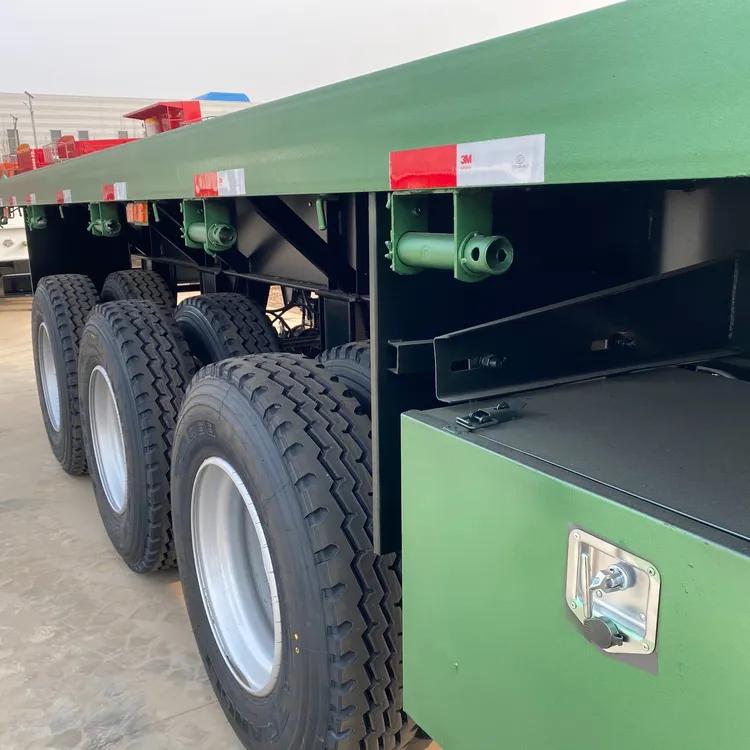
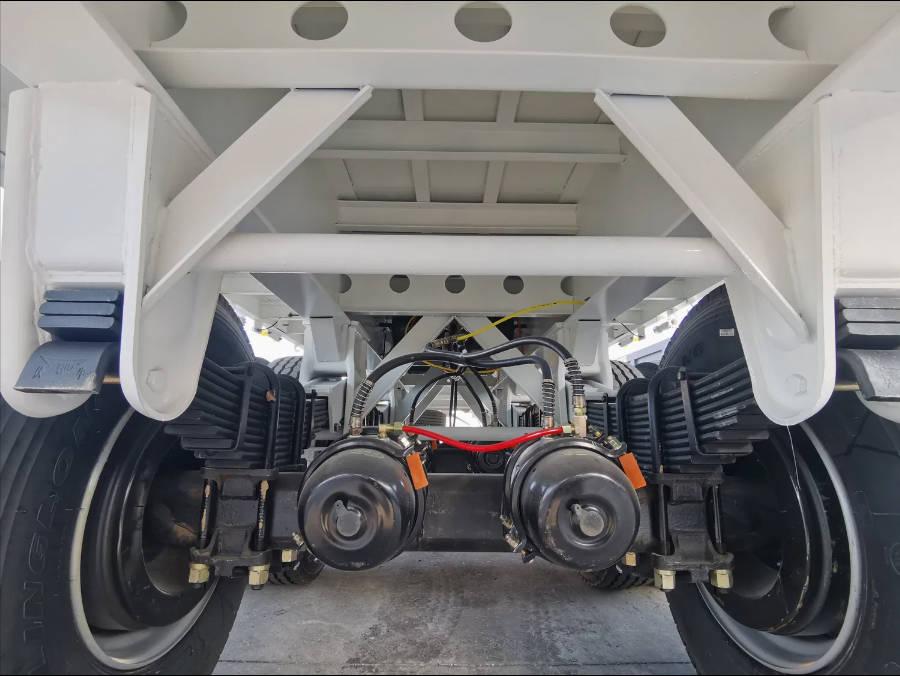
| Feature | Mechanical Suspension | Air Suspension |
|---|---|---|
| Initial Cost | Generally lower | Generally higher |
| Maintenance | Simple | More complex |
| Rough Road Performance | Good | Good |
| Ride Comfort | Moderate | Better |
| Load Stability | Good | Very good |
| Common Application | Heavy-duty and rough-road use | Highway and sensitive cargo |
Mechanical suspension is often selected for demanding operating environments because of its relatively simple structure and ease of maintenance.
Air suspension can provide improved ride quality and load protection but generally requires more components and maintenance.
When purchasing a flatbed semi trailer, pay attention to the following features.
The main beams are critical structural components. Buyers should consider:
Beam height
Steel grade
Beam thickness
Welding quality
Cross-member design
Axles should be selected according to:
Rated capacity
Local availability of spare parts
Service network
Operating environment
Common international axle brands and Chinese axle manufacturers are available depending on the market and budget.
A reliable braking system is essential for heavy cargo transportation.
Depending on market requirements, trailers can be equipped with systems and components from recognized manufacturers such as WABCO or equivalent suppliers.
For container transportation, correctly positioned twist locks are essential.
Before ordering, confirm whether you need:
20 ft container positions
40 ft container positions
45 ft container positions
Multiple container configurations
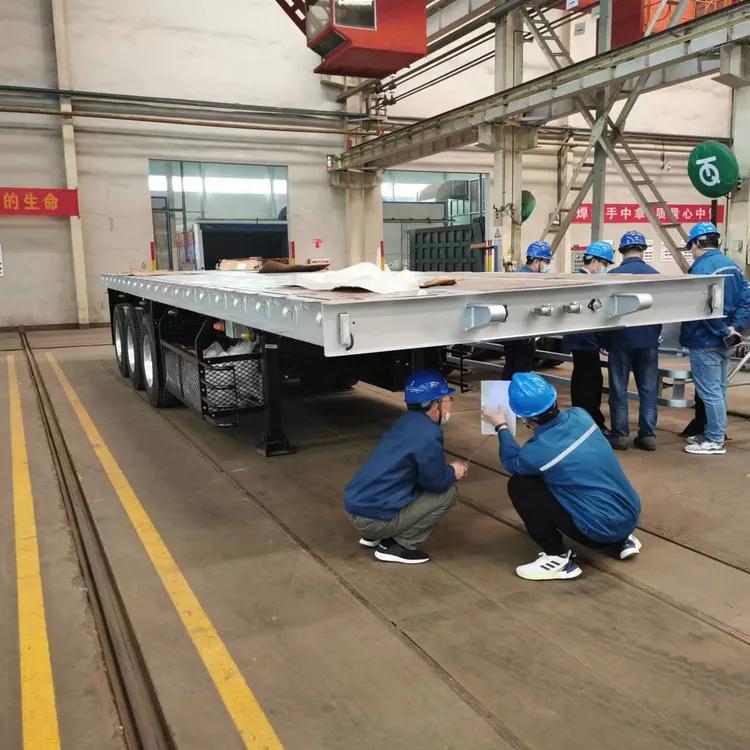
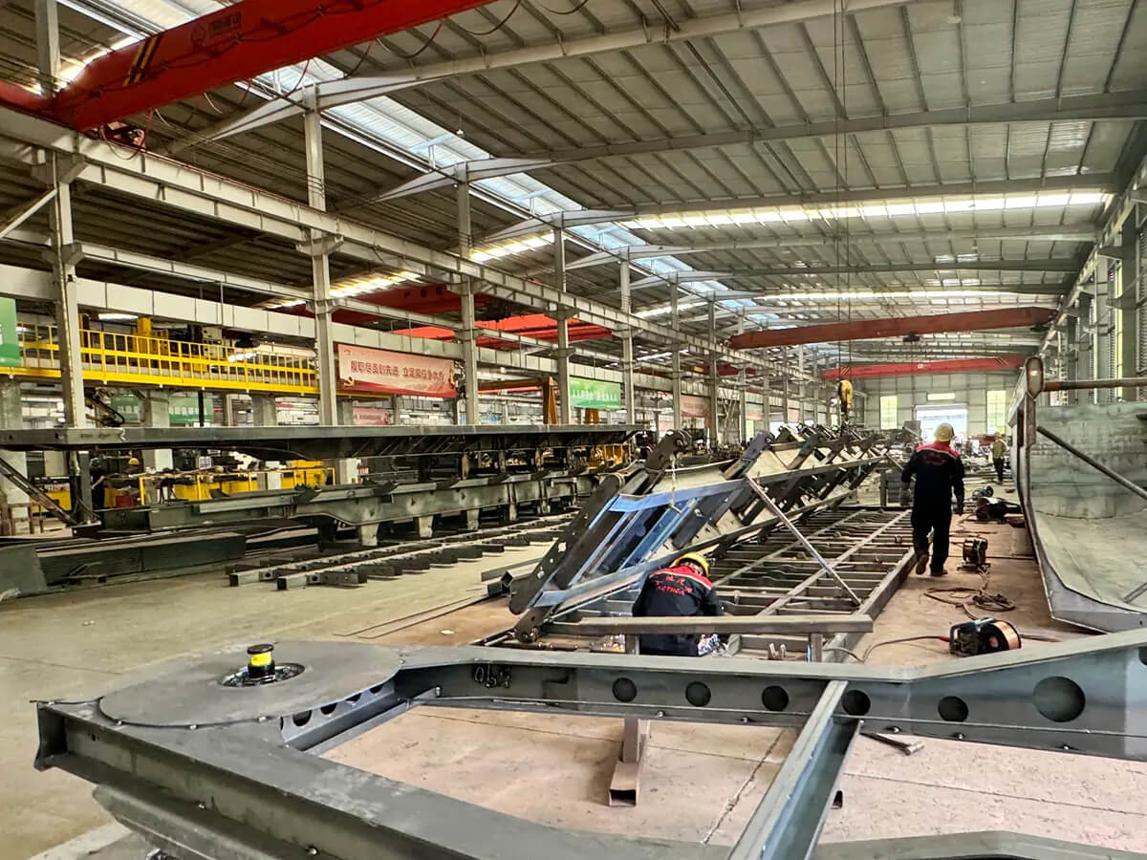
OEM manufacturing allows buyers to customize trailers based on cargo requirements and local regulations.
| Customization | Options |
|---|---|
| Length | Standard / Customized |
| Width | Standard / Customized where legal |
| Axles | 2 / 3 / 4 / 5+ |
| Suspension | Mechanical / Air |
| Deck | Steel / Checker Plate / Customized |
| Twist Locks | Optional |
| Tires | Different brands and specifications |
| Landing Gear | Different brands |
| Paint | Customer color |
| Logo | OEM branding |
| Accessories | Customized |
Before requesting a quotation, prepare the following information.
Provide:
Cargo type
Cargo weight
Cargo length
Cargo width
Cargo height
Select:
Trailer length
Trailer width
Number of axles
Suspension type
Deck structure
Confirm:
Maximum gross vehicle weight
Axle-load limits
Maximum dimensions
Braking requirements
Lighting requirements
Evaluate:
Manufacturing experience
Steel specifications
Component brands
Quality control
OEM capabilities
Export experience
Spare parts availability
Before production, request a technical drawing showing:
Overall dimensions
Axle positions
Kingpin location
Deck dimensions
Twist-lock positions
Loading height
This helps avoid costly specification misunderstandings.
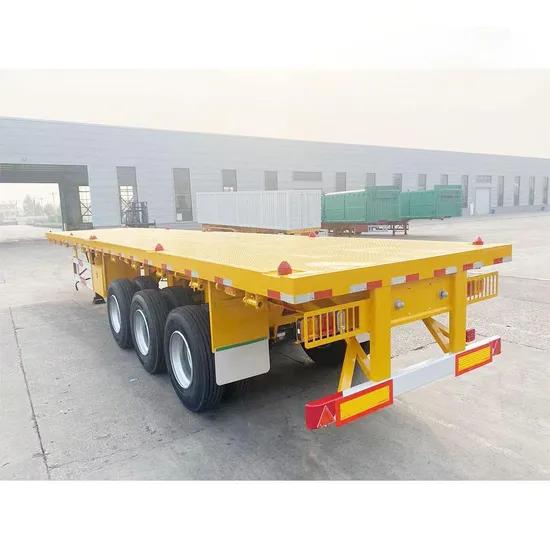
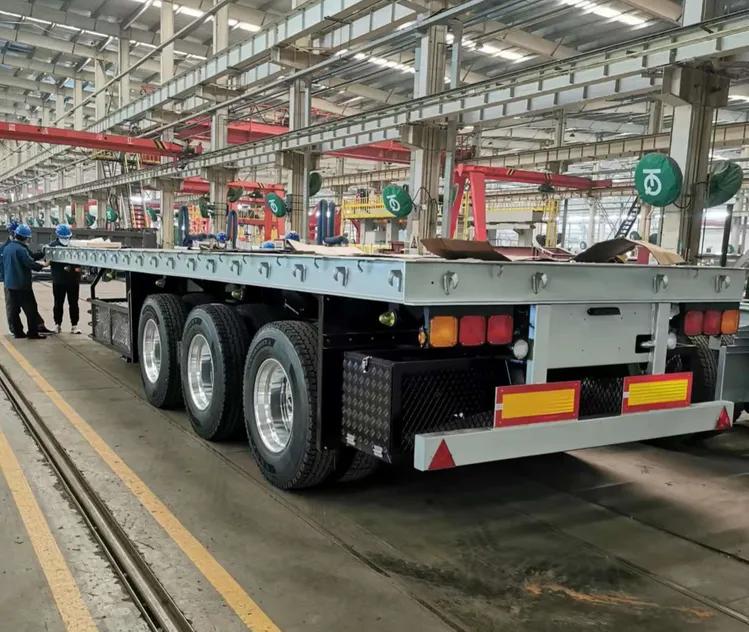
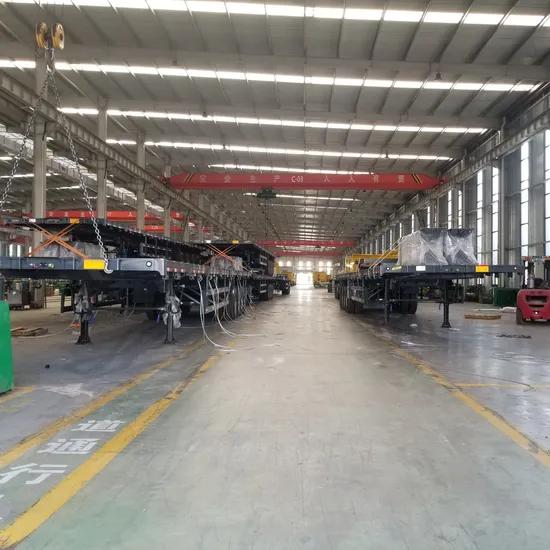
Hunan Chengxin Special Vehicle Co., Ltd provides flatbed semi trailers and customized transportation solutions for international customers.
The company focuses on:
Trailer configurations can be customized according to:
Cargo requirements
Local road conditions
Destination-country regulations
Customer branding
Trailer structures can be engineered with high-strength steel and reinforced components for demanding transportation applications.
For international buyers, the manufacturer can support:
Technical specifications
Production communication
Pre-shipment inspection
Export documentation
Spare parts support
| Item | What to Confirm |
|---|---|
| Cargo | Type, weight and dimensions |
| Capacity | Rated payload and axle ratings |
| Dimensions | Length, width and deck height |
| Axles | Number and rated capacity |
| Suspension | Mechanical or air |
| Tires | Size and load rating |
| Brake System | Configuration and components |
| Twist Locks | Required container positions |
| Steel | Grade and thickness |
| Landing Gear | Brand and capacity |
| Lighting | Destination-market requirements |
| Documentation | Drawings and technical specifications |
| Warranty | Terms and coverage |
A flatbed semi trailer is mainly used to transport containers, steel products, construction materials, machinery, timber, agricultural equipment, and other cargo that benefits from an open loading platform.
Depending on its configuration, a flatbed semi trailer may be designed for approximately 30 to 100+ tons of payload. However, the legal payload depends on the trailer, tractor, axle ratings, and regulations in the destination country.
A flatbed trailer has a relatively straightforward open platform and is highly versatile. A lowbed trailer has a lower loading deck and is primarily designed for transporting tall and heavy machinery.
Yes. A properly configured flatbed semi trailer can carry a 40-foot ISO container when equipped with compatible twist locks and when the combination complies with applicable weight and dimensional regulations.
Yes. Manufacturers can customize trailer length, axle configuration, suspension, deck design, twist-lock positions, tires, landing gear, paint, and other components according to customer requirements.
A flatbed semi trailer is a versatile transportation solution for logistics, container shipping, construction, manufacturing, agriculture, and heavy cargo applications. Its open-deck structure provides excellent loading flexibility, while different axle configurations, materials, suspension systems, and OEM options allow the trailer to be adapted to different transportation requirements.
When choosing a flatbed trailer, buyers should look beyond the purchase price. Payload capacity, axle ratings, dimensions, steel quality, braking system, suspension, cargo requirements, local regulations, and manufacturer experience all need to be considered.
For customers looking for a customized solution, Hunan Chengxin Special Vehicle Co., Ltd can provide OEM flatbed semi trailer configurations designed around specific cargo and market requirements.
Email:luna@hncx168.com
What's app: +86 13787356058


